
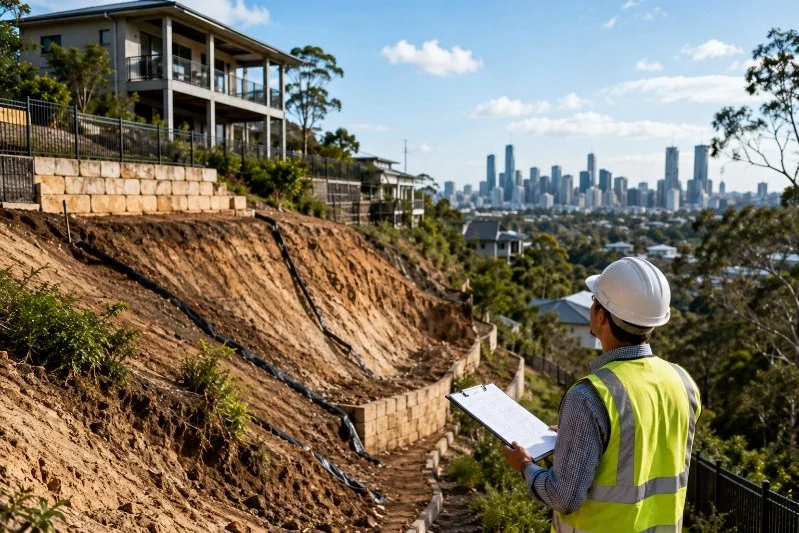
If your property sits on or near sloped land in Brisbane, you need to understand slope stability hazard overlay in Brisbane regulations. These rules exist to protect properties and lives from landslides, soil movement, and structural damage. Many property owners discover these requirements only when applying for building permits, leading to costly delays and unexpected expenses.
Here’s what you need to know about slope stability rules in Brisbane and how they affect your property development plans.
What Is a Slope Stability Hazard Overlay?
A slope stability hazard overlay is a planning layer that identifies areas prone to land movement, erosion, or collapse. Brisbane City Council maps these zones based on terrain analysis, soil composition, and historical data. If your property falls within this overlay, you’ll face additional building requirements designed to prevent slope failures.
These overlays typically affect properties with:
- Steep gradients exceeding 15 degrees
- Hillside locations with unstable soil conditions
- Areas near previous landslide sites
- Properties with significant elevation changes
Why These Rules Matter
Slope stability regulations in Brisbane aren’t bureaucratic red tape. They’re essential safety measures. Brisbane’s subtropical climate brings heavy rainfall that saturates soil and increases landslide risk. Without proper assessment and engineering, building on slopes can result in:
- Foundation failure and structural damage
- Erosion undermining neighbouring properties
- Blocked drainage causing water damage
- Legal liability for damages to adjacent land
Understanding these rules before purchasing or developing land saves money and prevents headaches down the track.
Key Requirements for Property Owners
1..Geotechnical Assessment Mandatory
Before any construction begins, you’ll need a geotechnical assessment in Brisbane from a qualified engineer. This isn’t optional for properties in overlay areas. The assessment examines:
- Soil composition and bearing capacity
- Groundwater levels and drainage patterns
- Slope angle and stability factors
- Potential for soil movement
Your soil testing Brisbane report must meet Australian Standards and provide specific recommendations for foundation design and site preparation.
2. Building Setback Restrictions
Council regulations typically require larger setbacks from slope crests and toes. Standard setback distances are:
- Minimum 6 meters from the top of slopes steeper than 25 degrees
- Minimum 3 meters from the base of significant slopes
- Additional buffer zones for known unstable areas
These setbacks prevent additional load on unstable ground and allow space for erosion management.
3. Drainage and Erosion Control
Proper water management is critical for slope stability. Your development application must include:
- Stormwater drainage systems directing water away from slopes
- Erosion control measures like retaining walls or vegetation
- Regular maintenance plans for drainage infrastructure
Many property owners underestimate drainage requirements, only to face rejection when submitting plans.
4. Foundation Engineering Requirements
Standard slab-on-ground foundations won’t cut it in overlay areas. You’ll likely need:
- Deeper footings anchored into stable soil or bedrock
- Pier and beam systems to distribute loads
- Engineered retaining walls for cut and fill work
- Reinforced concrete designed for slope conditions
These engineered solutions cost more upfront but prevent catastrophic failure later.
The Development Application Process
Navigating slope stability hazard overlay in Brisbane requirements means following these steps:
Step 1: Property Search and Overlay Check Before purchasing land, check Brisbane City Council’s online mapping to identify overlay zones. This simple search can save thousands in unexpected costs.
Step 2: Engage Qualified Professionals Hire a geotechnical engineer and structural engineer familiar with slope stability Brisbane regulations. Their expertise ensures your plans meet council requirements the first time.
Step 3: Conduct Soil Testing Professional soil testing Brisbane services will drill test holes, analyze samples, and provide detailed reports about your site’s stability and bearing capacity.
Step 4: Prepare Engineering Plans Your engineer uses soil test results to design foundations, retaining walls, and drainage systems that comply with overlay rules.
Step 5: Submit Development Application Include all required documentation: geotechnical reports, engineering plans, drainage diagrams, and erosion control strategies.
Step 6: Address Council Requests Council may request additional information or plan modifications. Respond promptly to avoid delays.
Common Mistakes Property Owners Make
Many property owners stumble with slope stability rules by:
- Skipping proper soil investigation to save money
- Using inexperienced contractors unfamiliar with overlay requirements
- Ignoring neighbouring property impacts
- Failing to maintain drainage systems after construction
- Assuming standard building methods will work on slopes
These mistakes lead to rejected applications, expensive redesigns, or worse, structural failures after construction.
Cost Considerations
Building in slope stability hazard overlay in Brisbane areas costs more than flat land development. Budget for:
- Geotechnical assessment: $2,500 to $8,000
- Additional engineering fees: $5,000 to $15,000
- Specialized foundations: 20% to 50% more than standard slabs
- Retaining walls: $300 to $800 per square meter
- Enhanced drainage systems: $5,000 to $20,000
While these numbers seem daunting, they’re essential investments that protect your property value and ensure safety.
Ongoing Responsibilities
Your obligations don’t end after construction approval. Property owners must:
- Maintain drainage systems and clear debris regularly
- Monitor slopes for cracks, movement, or erosion signs
- Keep vegetation healthy to stabilize soil
- Report any instability concerns to council immediately
- Update engineering assessments if making further changes
Neglecting maintenance can void insurance and create liability issues if problems develop.
Getting Expert Help
Don’t navigate slope stability regulations alone. Professional soil testing Brisbane services provide the foundation for successful development. Companies like GeoTest Group offer comprehensive geotechnical assessments that meet all council requirements and identify potential issues before they become expensive problems.
Working with experienced professionals means:
- Accurate soil analysis and stability ratings
- Engineering solutions tailored to your site
- Faster council approvals with complete documentation
- Peace of mind knowing your development is safe and compliant
Building on sloped land presents challenges but understanding the rules and working with qualified experts turns these challenges into opportunities for stunning hillside homes and developments.
Minor internal renovations typically don’t require reports, but any structural changes, extensions, or new buildings do need full geotechnical assessment.
Most soil testing Brisbane projects take 1-2 weeks from initial site visit to receiving your detailed geotechnical report.
No, overlays are permanent planning designations based on terrain and geological conditions that cannot be changed through appeals.
Unapproved construction can result in stop-work orders, fines up to $80,000, mandatory demolition, and difficulty selling the property.
Yes, insurers may charge higher premiums or require engineering reports proving stability before providing coverage for properties in overlay zones.
