
Soil Failure

When Do You Need a DCP Test in Brisbane?

You need a DCP Test in Brisbane before building a home, designing a driveway, working on filled or disturbed ground, or when your engineer or council requires soil strength data for approval. It measures how strong your soil is before construction begins.

What Is a DCP Test?

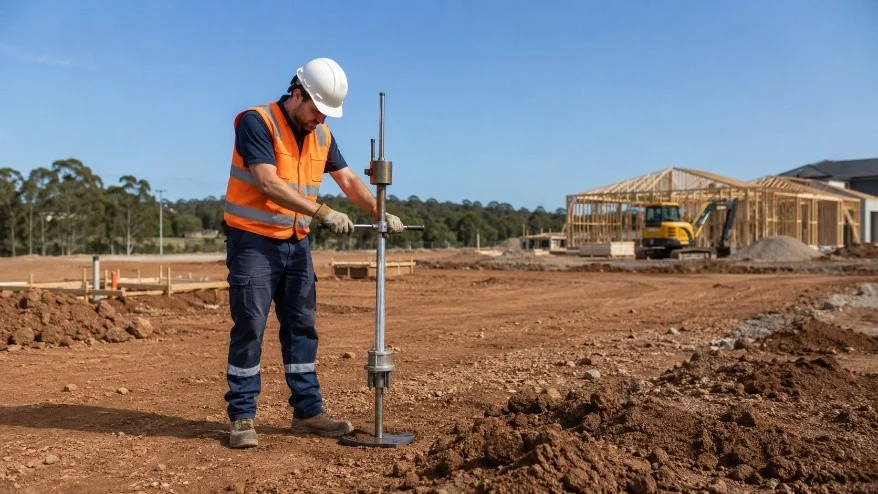
A Dynamic Cone Penetrometer Test Brisbane is a ground-level soil test. A steel rod with a cone tip is driven into the soil using a drop hammer. Engineers count how many blows it takes to penetrate each depth layer.

This gives a clear picture of soil bearing capacity – the soil’s ability to carry the weight of a structure above it.

The data is used to calculate a CBR (California Bearing Ratio) value, which engineers need to design safe foundations, slabs, and pavements.

Why it matters: Without knowing your soil strength, any structure built on it is a calculated guess – and in Brisbane’s variable soil conditions, that’s a risk no builder or homeowner should take.

6 Situations When You Need a DCP Test in Brisbane

1. Before Building a New Home

A Residential Soil Test Brisbane is one of the first steps in any new home build. Your structural engineer uses it to decide what type of footing your home needs – slab-on-ground, waffle pod, pad footings, or deep piers.

Brisbane’s soils range from highly reactive clay to loose sandy fill. What’s under your block directly affects how your home sits, shifts, and settles over time.

2. When Designing a Driveway or Pavement

Concrete driveways, carparks, and road pavements must be designed for the actual soil underneath them. The DCP Test Brisbane provides the CBR value that determines how thick the pavement base needs to be.

Without this, pavements are either over-engineered (wasting money) or under-built (cracking within years).

3. On Fill Sites or Previously Disturbed Land

If the site has been excavated, backfilled, or built on before, soil conditions are unpredictable. Geotechnical Testing Brisbane confirms whether the compacted fill is stable enough to build on.

This is especially critical on subdivided blocks, sloping sites, and land near old demolition sites.

4. After Flooding or Extended Wet Weather

Water-saturated soil loses bearing capacity fast. After prolonged rain or flooding events, a DCP Test in Brisbane confirms the soil has regained enough strength before construction resumes.

This step is often skipped – and it’s often the reason pavements and slabs crack in flood-prone areas.

5. For Council Approval or Engineering Certification

Brisbane City Council and private certifiers regularly require Soil Testing Brisbane results before issuing building approvals. Having the DCP data ready removes a common delay in the approval process.

If your engineer asks for subgrade data – this test is the answer.

6. Retaining Walls and Major Earthworks

Any retaining structure needs soil strength data behind and beneath it. Geotechnical Testing Brisbane through a DCP test gives the structural engineer accurate input so retaining walls are built to last.

What Happens During a DCP Test?

Here’s the step-by-step process so you know what to expect:

  1. A technician arrives at your site with DCP equipment
  2. The cone is driven into the ground at multiple test locations
  3. Blow counts are recorded at set depth intervals
  4. Data is analysed to produce a site CBR profile
  5. A written report with findings and design recommendations is issued

Most residential sites are completed in 1–2 hours in the field. Turnaround on reports is typically fast, so it won’t hold up your project timeline.

Why Brisbane Soil Needs Special Attention

Brisbane sits on a diverse range of soil types:

  • Reactive clay (western and southern suburbs) — shrinks and swells with moisture changes
  • Sandy or loose fill soils (coastal and low-lying areas) — low bearing capacity
  • Weathered rock (hillside and Highgate Hill-type areas) — variable profile depth

Each soil type responds differently under load and moisture. A Residential Soil Test Brisbane removes all the guesswork and gives your build team a factual foundation to work from.

This is exactly why DCP Test Brisbane services are in high demand across Greater Brisbane – including Ipswich, Logan, Moreton Bay, and the Redlands.

How GeoTest Group Can Help

GeoTest Group provides professional DCP Test in Brisbane services for residential, commercial, and civil projects. Their team delivers accurate results, fast reporting, and practical recommendations you can use.

Whether you’re a homeowner, builder, or engineer – getting the right Geotechnical Testing Brisbane data early in your project is the smartest investment you’ll make.

A DCP Test Brisbane measures the bearing strength of soil at different depths to help engineers design safe foundations and pavements.

It is not always legally required, but Dynamic Cone Penetrometer Test Brisbane results are routinely requested by structural engineers and certifiers before approvals.

Book Soil Testing Brisbane before your engineer starts the footing or pavement design – ideally right after purchasing your block.

Geotechnical Testing Brisbane fieldwork on a residential site is typically completed within one to two hours.

Without a Residential Soil Test Brisbane, your engineer must use conservative assumptions – which can increase build costs or lead to structural problems after completion.

Soil Failure

What Does a DCP Test Cost in Brisbane?

A DCP Test in Brisbane typically costs between $400 and $800 for a standard residential site with two to four test locations. A single test point starts from around $150. The final price depends on the number of locations, site access, and whether a full interpreted report is required.

What Is a DCP Test?

A Dynamic Cone Penetrometer Test Brisbane is a ground strength test. A weighted hammer drives a steel cone into the soil layer by layer, and the resistance it meets tells engineers exactly how firm or soft the ground is beneath the surface.

It is one of the most widely used forms of Geotechnical Testing Brisbane because it is fast, affordable, and gives reliable results — without the need for heavy excavation equipment or major site disruption.

The test follows the Australian Standard AS 1289, which means the results are accepted by engineers, certifiers, and councils across Queensland.

When Do You Need a DCP Test in Brisbane?

Your builder, engineer, or council may request a DCP Test Brisbane in situations like these:

  • Before building a new home or extension — to confirm the soil can support the planned foundation design
  • For driveways and pavements — to measure subgrade strength before laying concrete or asphalt
  • For council or certifier approval — some Brisbane local governments include it in the development approval process
  • After earthworks or site filling — to verify that compacted fill has reached the required strength standard

If you are unsure whether your project needs one, ask your engineer early. Getting this done before any concrete is poured is far cheaper than fixing problems after the fact.

DCP Test Cost in Brisbane: Price Breakdown

Here is a realistic guide to what you can expect to pay for a DCP Test Brisbane in 2024 and 2025:

Service Estimated Cost (AUD)
Single test location $150 – $250
Full site test (2–4 locations) $400 – $800
With detailed interpreted report $600 – $1,200
Combined soil testing package Quote-based

These are indicative figures. For an accurate quote on Soil Testing Brisbane, contact a licensed geotechnical firm with your site address and project details. Most provide a free quote within 24 hours.

What Affects the Final Price?

Not every site costs the same to test. Here are the main factors that influence pricing for a DCP Test Brisbane:

Number of test points More test points give engineers a fuller picture of your site. A standard Brisbane residential block usually needs three to four test locations.

Site conditions Steep or difficult-to-access blocks, dense vegetation, and wet ground all take more time and effort to test. These conditions can add to the total cost.

Report type A basic data printout is cheaper than a fully interpreted geotechnical report that includes design recommendations. Check with your engineer which level of detail they need.

Turnaround time If you need results urgently, most firms can provide priority turnaround – but this typically attracts an additional fee of $50 to $150.

Bundled testing Combining a Residential Soil Test Brisbane with a DCP test in a single site visit often reduces the overall cost compared to booking them separately.

Location within Brisbane Inner Brisbane suburbs is generally cheaper to mobilise to than outer areas like the Scenic Rim, Ipswich fringe, or the outer Logan corridor.

What Does the Service Include?

A professional Dynamic Cone Penetrometer Test Brisbane service from a reputable firm should include the following:

  • Site visit and mobilisation to your property
  • Testing at agreed locations following AS 1289 standards
  • Field data recorded at every 10 to 15mm of penetration
  • Penetration rate graphs showing soil strength at depth
  • A written report with results and recommendations (where requested)
  • Digital delivery of the final report, typically within 24 to 48 hours

When comparing providers, ask what is included in the quoted price — particularly whether report interpretation and written recommendations are covered.

Is It Worth the Cost?

A DCP Test in Brisbane is one of the smallest line items in any construction budget – but one of the most important decisions you can make.

Consider the difference:

  • DCP test cost: $400 – $800
  • Cost to repair a failed slab or cracked foundation: $10,000 – $50,000+

Engineers, builders, and certifiers rely on this data to make safe, appropriate design decisions. Without it, every design decision about footings and foundations is based on assumptions – and assumptions on soil can be very expensive to get wrong.

Geotechnical Testing Brisbane is not just a regulatory requirement. It is basic risk management for any property project.

Who Should You Use for DCP Testing in Brisbane?

When choosing a provider for Soil Testing Brisbane, look for the following:

  • NATA accreditation, or a formal partnership with a NATA-accredited laboratory
  • Hands-on experience with Brisbane soil conditions – reactive clay, sandy fill, and weathered rock profiles are all common across South East Queensland
  • Clear written quotes with no hidden charges
  • Fast report turnaround – ideally 24 to 48 hours for standard jobs
  • Familiarity with local council and certifier requirements

GeoTest Group provides professional DCP Test Brisbane and Soil Testing Brisbane services across Southeast Queensland. With experience across residential, commercial, and civil projects, the team understands local soil conditions and what engineers and certifiers need from a geotechnical report.

A DCP Test in Brisbane is a small investment that protects a much larger one. Whether you are building a house, laying a driveway, or preparing a commercial site, knowing your soil strength before you build saves time, money, and a significant amount of stress further down the track.

If you are not sure what testing your site needs, speak with a licensed Geotechnical Testing Brisbane expert. They will tell you exactly what is required — and what it will cost.

Most DCP tests are completed within one to two hours on-site, depending on the number of test locations and site conditions.

It is not always legally required, but engineers and certifiers commonly request it to ensure safe and accurate foundation design.

No — a DCP test measures soil strength, while a full geotechnical report covers additional factors such as soil classification, reactivity rating, and design recommendations.

Sometimes yes, as they measure different soil properties — but many providers offer a combined package at a reduced overall cost.

Contact a local geotechnical firm with your site address, project type, and any engineer or certifier requirements — most offer a free quote within 24 hours.