
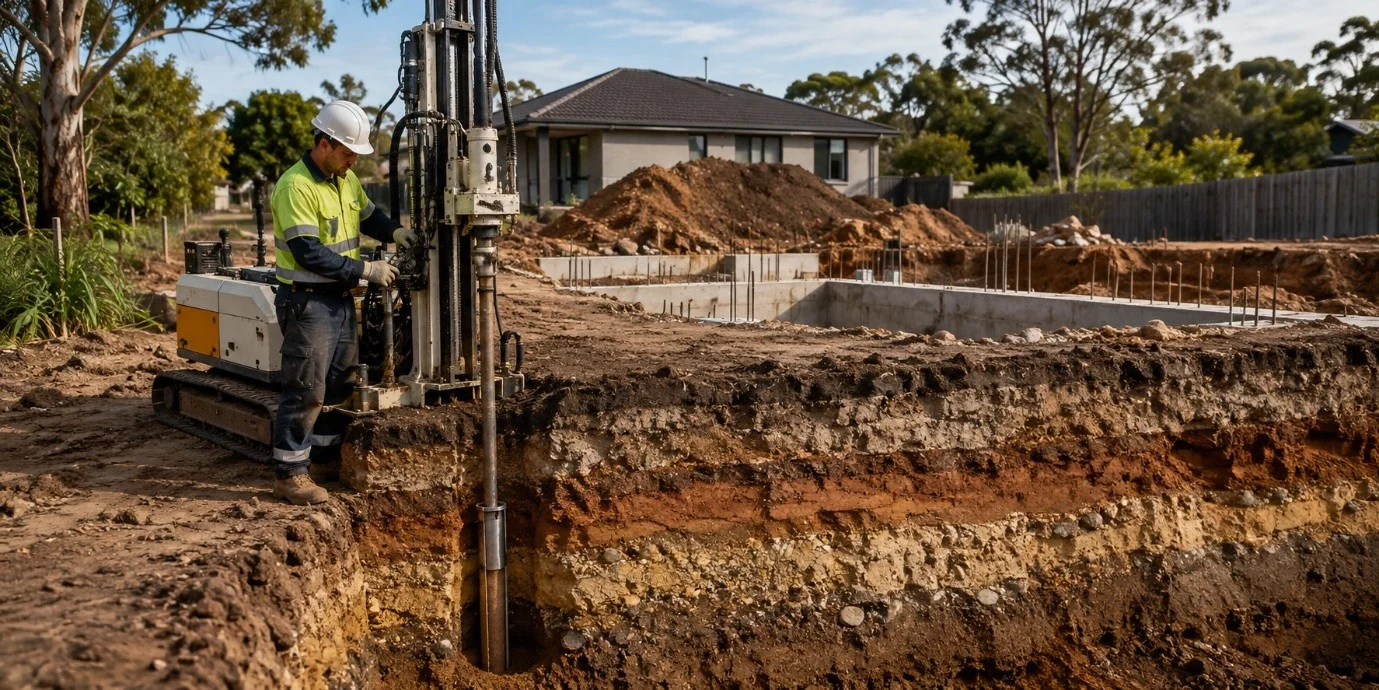
Building a new home is a major investment, and the foundation plays an important role in keeping the structure safe and stable. However, problems can develop when construction begins without understanding the ground beneath the property. Soil Testing Brisbane can help identify potential soil-related risks before construction starts, giving builders and engineers useful information for planning a suitable foundation.
Soil may look firm and stable from the surface, but conditions can change below ground. Different layers may have different strengths, moisture levels, densities, and movement characteristics. Testing these conditions early can reduce the risk of unexpected foundation issues later.
Why Are Foundation Problems Linked to Soil?
A building transfers its weight into the ground through its foundation. If the supporting soil is weak, unstable, highly reactive, or affected by changing moisture conditions, the foundation may experience movement.
Common foundation problems can include cracking, uneven settlement, floor movement, sticking doors and windows, and structural distortion. These issues are not always caused by poor construction. In some cases, the underlying soil conditions are a major contributing factor.
For this reason, understanding the ground before designing and constructing a building is an important part of the planning process.
What Does Soil Testing Brisbane Identify?
Professional geotechnical soil testing provides information about the characteristics of the ground at a proposed building site. Depending on the project, testing may investigate soil strength, classification, moisture conditions, reactivity, compaction, and other relevant characteristics.
The results can help identify conditions that may affect the performance of a future structure.
For example, testing may reveal:
- Weak or compressible soil
- Reactive clay
- lose or poorly compacted material
- Variable soil layers
- Fill material
- Potential ground movement
- Conditions that may influence foundation selection
Identifying these factors before construction gives the project team an opportunity to consider appropriate solutions.
How Can Soil Testing Help Prevent Future Foundation Problems?
Soil testing does not guarantee that foundation problems will never occur. However, it can significantly improve decision-making by providing reliable information about the site.
1. It Helps Determine Soil Strength
A foundation needs adequate ground support. If soil has insufficient bearing capacity, excessive settlement may occur when the building load is applied.
Testing helps engineers understand the site’s supporting conditions and consider an appropriate foundation design.
2. It Identifies Reactive Soil
Some clay soils can expand when they absorb moisture and shrink when they dry. Repeated changes can create movement beneath a building.
Identifying reactive soil during a soil investigation allows the design team to consider the site’s movement characteristics when planning the foundation.
3. It Helps Detect Variable Ground Conditions
Not every part of a property necessarily contains the same soil. One area may consist of firm natural soil while another contains fill or softer material.
Understanding these variations can help reduce the possibility of designing a foundation based on incorrect assumptions about the entire site.
4. It Supports Better Foundation Design
The information contained in a soil report Brisbane can be used by relevant professionals when assessing the requirements of a proposed building.
Rather than relying on general assumptions, engineers can make decisions based on actual site conditions. This can help the project team select a foundation approach that is appropriate for the ground.
5. It Can Reduce Unexpected Construction Costs
Discovering problematic soil after construction has started can result in delays, additional investigation, redesign, or remedial work.
Early soil testing can identify potential risks before major construction activities begin. This gives property owners and builders more opportunity to plan for site-specific requirements.
Why Is Soil Investigation Important Before Building?
A soil investigation is valuable because every building site has its own characteristics. Two properties located in the same Brisbane suburb may still have different ground conditions.
Previous development, landscaping, excavation, imported fill, drainage, groundwater, and natural geological conditions can all influence the soil.
A proper investigation provides site-specific information rather than relying solely on assumptions or nearby property experience.
What Happens Without Proper Soil Testing?
Skipping an appropriate ground assessment can create uncertainty during the foundation design and construction process.
If unexpected soil conditions are discovered after work begins, the project may require additional investigation or engineering input. In more serious situations, unsuitable ground conditions can contribute to excessive movement or settlement.
This is why building foundation decisions should be based on appropriate site information wherever required.
The cost of testing is generally small compared with the potential cost and disruption associated with major foundation repairs.
Is Soil Testing Only Important for New Homes?
No. While residential construction is a common reason for soil testing, ground investigations can also be relevant to extensions, renovations, retaining structures, commercial developments, and other construction projects.
An extension, for example, may place additional loads on the existing ground or connect a new foundation to an older structure. Understanding the soil can help the project team account for these conditions.
How Soil Testing Supports Safer Brisbane Construction
Brisbane properties can have varied geological and ground conditions, so site-specific information is important when planning construction.
Professional Soil Testing Brisbane services can provide valuable information about the ground before foundation work begins. The results can help identify potential risks, support engineering decisions, and reduce uncertainty during construction.
However, soil testing is only one part of a successful building project. Proper engineering, drainage, construction practices, site preparation, and ongoing maintenance also contribute to long-term foundation performance.
Choose Professional Soil Testing Before Construction
Foundation repairs can be disruptive and expensive, particularly when problems could have been identified or better managed during the planning stage. Testing the ground before construction provides an opportunity to understand potential risks and make informed decisions.
If you are planning a new home or construction project, professional geotechnical soil testing can help you understand your site’s ground conditions before foundation work begins.
Soil testing can identify ground risks early, helping engineers design foundations suitable for the site’s soil conditions.
It provides information about soil strength, reactivity, composition, and other conditions that may affect foundation performance.
Yes, appropriate testing can help identify reactive soil and provide information needed for foundation planning.
Testing requirements depend on the site and project, but a professional assessment is valuable where ground conditions may affect construction.
Early testing can help identify potential ground risks before construction, reducing the likelihood of unexpected foundation-related costs.


