
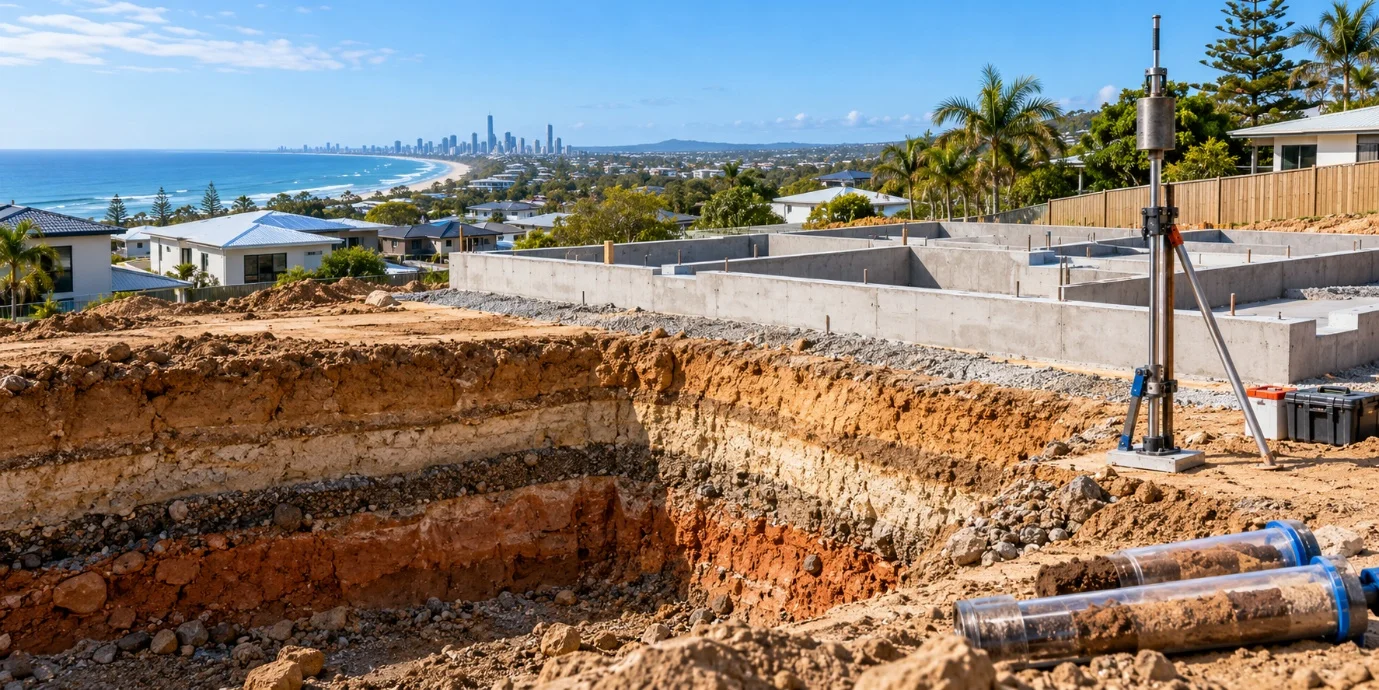
When planning a new home, soil is one of the first things that should be understood before construction begins. Soil Testing in Logan can provide useful information about ground conditions, while GeoTest Group helps property owners and builders understand the soil characteristics that may affect a building project. Although a site may look stable from the surface, conditions below ground can be very different. Knowing what lies beneath the proposed building area can support better planning and help reduce unexpected construction issues.
What Makes Soil Quality Important?
Soil provides the base on which a home is built. Its strength, composition, moisture content, and ability to support loads can influence how a building performs over time. Different blocks of land can have very different soil conditions, even when they are located close to one another.
Some sites may contain clay, sand, fill, gravel, rock, or a combination of different materials. Each soil type can respond differently to changes in moisture and pressure. Understanding these conditions is therefore an important part of responsible building preparation.
A proper assessment of Soil Quality Gold Coast properties can give builders useful information before decisions about foundations and site preparation are finalised.
How Can Poor Soil Affect a Home?
Poor or unsuitable ground conditions can create challenges during and after construction. For example, soil that changes significantly with moisture may expand when wet and shrink during dry periods. This movement can place stress on foundations and other parts of a structure.
Weak or loose soil may also have limited capacity to support the expected building load. If the ground is not properly understood, foundation requirements may not be suitable for the actual conditions on the site.
This is why Soil Stability is an important consideration when preparing land for residential construction. Identifying potential ground-related concerns early gives the project team an opportunity to consider appropriate solutions.
Why Is Soil Testing Useful Before Construction?
A soil investigation provides information about the conditions beneath the surface. Depending on the project and site, testing may examine soil classification, strength, moisture conditions, density, reactivity, and other characteristics.
The results can help engineers and builders make informed decisions about site preparation and foundation design. A Soil Report can also provide documented information that may be useful during the planning and construction process.
Instead of relying only on what can be seen at ground level, testing gives a clearer picture of the material supporting the proposed building.
What About Drainage and Moisture?
Water can have a major effect on soil behaviour. Poor drainage may cause water to accumulate around or beneath a building site, while changes in moisture levels can affect certain types of soil.
Good site planning considers how surface and subsurface water may interact with the ground. Understanding Ground Conditions can therefore be helpful when assessing drainage requirements and possible moisture-related concerns.
Soil information can also help identify whether additional investigation or site preparation may be needed before construction begins.
Can Soil Conditions Affect Foundation Selection?
Yes. Foundation systems need to suit the conditions of the building site. A foundation that works well on one type of ground may not be appropriate for another.
Factors such as soil strength, depth, reactivity, fill material, groundwater, and expected building loads can all be relevant. Foundation Soil Testing helps provide technical information that engineers can consider when developing an appropriate foundation solution.
The objective is not simply to test the soil but to understand how the ground may interact with the proposed structure.
Why Should Gold Coast Homeowners Test Before Building?
Home construction involves many decisions, from architectural design to materials, drainage, landscaping, and foundations. Soil testing provides another important piece of information during the early planning stage.
A Building Site Assessment can help identify ground characteristics before major construction work begins. This may help reduce uncertainty and allow potential soil-related issues to be considered earlier rather than after construction has started.
Testing can be particularly useful for new residential blocks, extensions, renovations, subdivisions, and other projects where changes to the existing site are planned.
What Information Can a Soil Investigation Provide?
The information available depends on the testing carried out and the requirements of the project. A professional investigation may provide details about soil layers, material types, strength, density, moisture, and other characteristics.
These findings can help relevant professionals understand whether additional investigation, excavation, filling, drainage work, or specialised foundation considerations may be required.
A clear understanding of the site’s soil conditions can also support better communication between property owners, builders, engineers, and other project professionals.
Why Is Early Testing a Practical Step?
Testing before construction gives property owners an opportunity to understand the site before significant money is committed to building work. Discovering a ground-related issue during the planning stage can provide more time to consider the appropriate technical response.
Waiting until construction is underway can make changes more disruptive and potentially more complicated. Early knowledge of Soil Testing Gold Coast requirements can therefore form an important part of responsible project preparation.
Soil should not be treated as simply dirt beneath a building. It is an important part of the site’s overall performance and can influence how a home needs to be designed and constructed.
Good soil information can make residential construction planning more informed and organised. From foundation considerations to drainage and ground stability, understanding the site before building can help reduce uncertainty and support better technical decisions. For property owners who need reliable information about local ground conditions, Soil Testing In Logan is an important step, and GeoTest Group can assist with professional soil investigation and reporting for building projects. Understanding the ground before construction begins gives homeowners and project professionals valuable information for planning with greater confidence.
Soil quality can affect foundation performance, ground stability, drainage, and overall building requirements.
Soil testing is generally best completed during the planning stage, before construction and foundation decisions are finalised.
Yes, soil strength, movement, moisture, and composition can influence foundation design and requirements.
A soil report can document important information about the site’s soil characteristics and ground conditions.
Yes, testing helps identify ground conditions that may need to be considered before residential construction begins.

