
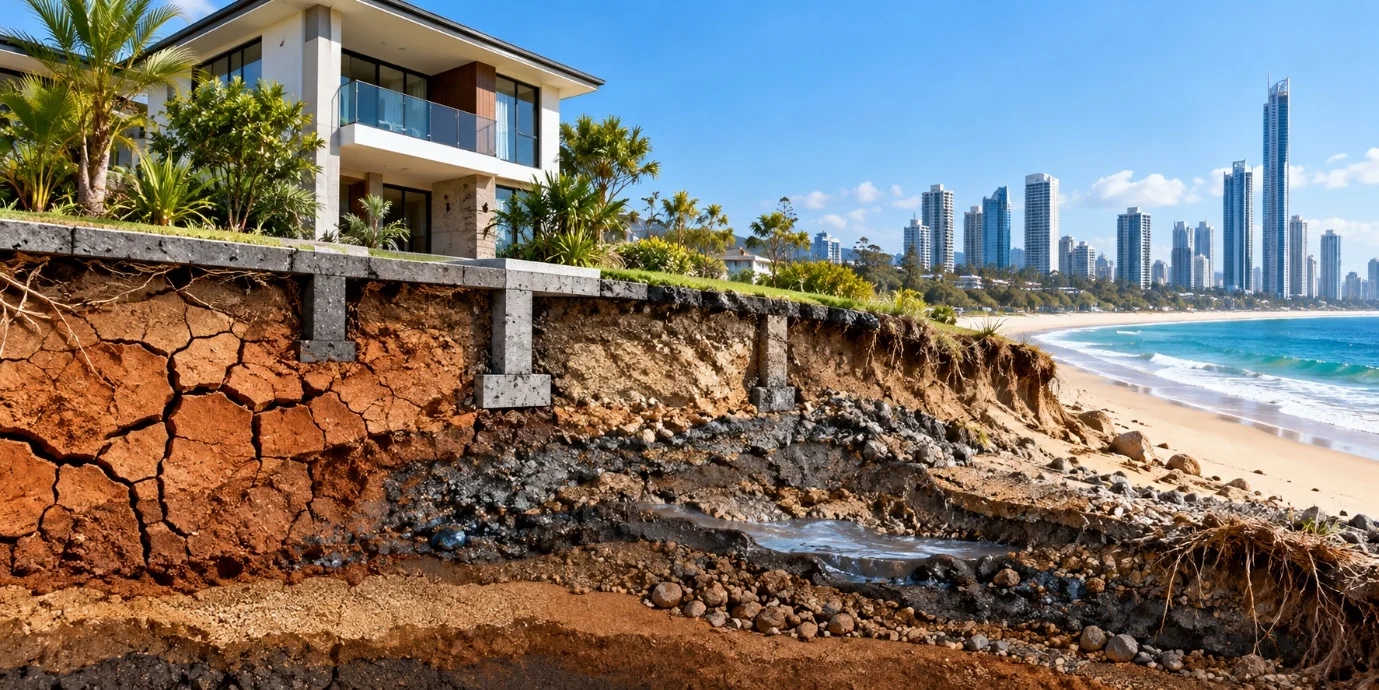
Soil Failure

What Soil Problems Can Affect Gold Coast Buildings

Building a home, commercial property or other structure requires more than a strong design and quality construction materials. The ground beneath the building also plays an important role. If the soil is weak, reactive, poorly drained or prone to movement, it can create problems for foundations and the building above them. GeoTest Group provides professional Soil Testing Gold Coast services to help identify potential ground-related issues and provide useful information for engineers, builders and property owners.

The Gold Coast has a variety of soil and ground conditions, making it important to understand the site before construction begins. Early soil assessment can help identify concerns such as reactive soil, settlement, poor drainage and erosion. Understanding these conditions can help engineers and builders make better-informed decisions about foundations and construction requirements.

1.Reactive Soil

Reactive soil is one of the major concerns when constructing buildings. These soils can expand when they absorb water and shrink when they dry.

This repeated movement can place stress on building foundations. Over time, it may contribute to cracking in walls, uneven floors, sticking doors and other signs of building movement.

A proper Reactive Soil assessment can help determine how the ground may respond to changes in moisture.

2.Soil Settlement

Soil settlement occurs when the ground beneath a building compresses or moves downward. Some settlement is possible after construction, but excessive or uneven settlement can become a serious concern.

Uneven Soil Settlement may cause different parts of a building to move at different rates. This can result in cracks, sloping floors and problems with doors or windows.

Understanding the condition and density of the soil before construction can help engineers select an appropriate foundation design.

3.Poor Soil Drainage

Water has a major influence on ground conditions. Poorly drained soil can remain saturated for extended periods, which may affect its strength and stability.

Excess water can also contribute to erosion, changes in soil volume and movement around foundations. Proper assessment of Soil Drainage conditions can help identify potential issues before construction begins. Drainage should therefore be considered alongside foundation and site design.

4.Soil Erosion

Soil erosion happens when soil is gradually removed by water or other environmental forces. It can become a concern on sloping blocks, areas exposed to heavy rainfall or sites where surface water is not properly controlled.

Significant Soil Erosion around a building can reduce ground support and expose parts of foundations. Managing surface water and understanding the site’s existing ground conditions can reduce the risk of erosion-related problems.

5.Unstable Ground Conditions

Not all ground provides the same level of support. Some sites may contain loose, soft or variable soil layers that require additional consideration during construction.

Unstable Ground Stability can affect how loads are transferred from a building into the ground. Without adequate investigation, these conditions may not be identified until construction has already started.

A detailed Soil Investigation can provide valuable information about the ground profile and help identify areas that may require further engineering attention. 

6.Poorly Compacted Fill

Some building sites contain fill that has been placed previously to change the ground level. If fill has not been properly placed and compacted, it may compress under the weight of a building.

Poorly compacted fill can lead to Building Foundation Problems, particularly where different parts of a site contain different types or depths of fill. Testing can help determine whether fill is present and provide information about its condition.

7.Soil Composition and Bearing Capacity

Different soils have different physical properties. Clay, sand, silt, gravel and fill can behave differently under building loads and changing moisture conditions. The soil’s bearing capacity is important because foundations need adequate support to safely transfer building loads into the ground.

Understanding Site Soil Conditions helps engineers make informed decisions about suitable foundation systems and construction requirements.

Why Soil Testing Matters Before Construction

Identifying soil problems early is generally easier and more cost-effective than dealing with unexpected ground conditions during construction.

Professional Gold Coast Soil Testing can provide information about the site’s soil characteristics, moisture conditions and other relevant ground factors. The results can then be considered by engineers and building professionals when developing the foundation and site design.

For property owners, testing can also provide greater confidence that potential ground conditions have been investigated before major construction work begins.

 When Should Soil Be Tested?

Ideally, soil should be assessed during the planning and design stage, before construction begins. Early Soil Testing Services Gold Coast professionals provide can help identify ground conditions that may influence the proposed building.

Testing may also be useful when investigating existing building problems, planning extensions or assessing unusual ground movement.

The type and extent of testing required will depend on the site, proposed development and relevant engineering requirements.

Choose Professional Soil Testing for Your Site

Every building site is different. A block that appears stable on the surface may have soil conditions underneath that require further investigation.

Professional Geotechnical Testing from GeoTest Group can provide a clearer understanding of ground conditions before construction decisions are finalised. Through Soil Testing Gold Coast services, potential issues such as reactive soil, settlement, drainage concerns, erosion and variable ground conditions can be identified early, helping property owners, engineers and construction professionals make better-informed decisions.

For Gold Coast projects, working with an experienced testing provider can help ensure that the site’s ground conditions are properly investigated before construction progresses.

Soil testing identifies ground conditions that may affect foundation design, stability and long-term building performance.

Reactive soil expands and contracts as its moisture content changes, potentially causing movement around building foundations.

Yes, significant soil movement or uneven settlement can contribute to cracks in walls, floors and other building elements.

Soil testing is best completed during the planning and design stage, before foundation and construction decisions are finalised.

Testing can help identify soil type, reactivity, compaction, bearing conditions, moisture-related issues and other site characteristics.

Soil Failure

What Makes Soil Testing Important for New Builds

Building a new home or commercial property is a major investment, so understanding the ground beneath the proposed site should be an important part of the planning process. GeoTest Group provides professional testing services to help identify soil and ground conditions that may affect construction. Soil Testing Gold Coast can provide valuable information about the site and help property owners, builders and engineers make informed decisions before construction begins.

What Is Soil Testing?

Soil testing is the process of examining soil to understand its physical and engineering properties. Different sites can have very different soil conditions, even when they are located close to each other.

A professional Soil Investigation can identify information such as soil type, strength, moisture conditions and other characteristics that may influence how a building should be designed.

The information collected during testing can help engineers understand the ground and determine whether additional design considerations are needed before construction starts.

Why Is Soil Testing Important for New Builds?

The ground supports the entire structure of a building. If the soil is weak, unstable or likely to move significantly, it can affect the performance of the foundations and the building above them.

Professional Geotechnical Testing provides information about the site before construction begins. This can help identify potential ground-related issues early and allow them to be considered during the design and planning stages.

Testing does not guarantee that every construction problem will be avoided, but it reduces the amount of guesswork involved in making important building decisions.

Identifying Different Ground Conditions

Soil can contain clay, sand, gravel, fill or a combination of different materials. Each type of soil can behave differently when subjected to building loads or changes in moisture.

Understanding these Ground Conditions is important when determining suitable construction methods. A professional Soil Analysis can provide useful information about the materials present beneath the proposed building area.

Without appropriate site information, construction decisions may be based on assumptions that do not accurately represent the actual conditions underground.

Helping With Foundation Design

Foundations are responsible for transferring the weight of a building safely into the ground. Their design needs to take the characteristics of the underlying soil into account.

Soil with different levels of strength, density or movement potential may require different foundation considerations. The results of Geotechnical Testing can provide engineers with information needed when assessing foundation requirements.

This can help reduce the risk of problems such as excessive settlement or movement that may affect the building over time.

Detecting Reactive Soil

Reactive soil is an important consideration for many construction projects. Some clay soils can expand when they absorb water and shrink when they dry.

Repeated expansion and contraction can cause movement beneath a structure. If these conditions are not considered during the design process, they may contribute to cracking or other building issues.

Appropriate Soil Testing Gold Coast can help identify soil characteristics that may indicate a potential for movement. This information allows engineers to consider suitable foundation and construction solutions for the site.

Understanding Site Classification

Site Classification helps describe how the soil at a building site is expected to behave and is an important consideration in residential construction.

A site assessment can provide information that supports the classification process and helps engineers account for the conditions present at the property.

It is important not to assume that neighbouring properties will always have identical soil conditions. Changes in soil type, fill, drainage and other factors can occur over relatively short distances.

Reducing Unexpected Construction Problems

Discovering unsuitable ground conditions after construction has started can result in additional work, delays and increased project costs.

Early Building Site Assessment can help identify potential issues before major construction activities begin. This gives builders and engineers an opportunity to consider the findings during the design and planning stages.

Early investigation can therefore help improve project preparation and reduce the likelihood of unexpected ground-related complications.

Supporting Better Construction Planning

Good construction planning depends on reliable information. Soil conditions can influence excavation, foundation requirements, drainage and other aspects of a new development.

Professional Soil Investigation gives the project team a clearer understanding of what is beneath the proposed building area. This information can be considered alongside engineering plans and other site requirements.

Having accurate ground information early can make it easier for property owners, builders and engineers to discuss potential construction requirements.

Protecting Your Building Investment

A new property is a significant financial commitment. While proper soil testing cannot eliminate every construction risk, it can help identify ground conditions that may otherwise remain unnoticed until construction is underway.

Professional Soil Analysis can provide useful information before foundation work begins. This can support better decisions and help reduce the possibility of costly changes caused by unexpected soil conditions.

For property owners, investing in appropriate site testing can therefore be a practical part of protecting the long-term performance of a new building.

Why Professional Soil Testing Matters

The type and extent of testing required can vary depending on the site, proposed building and project requirements. Professional testing should therefore be carried out using appropriate methods and equipment for the conditions being assessed.

Experienced Geotechnical Testing providers can collect and assess relevant site information and provide findings that can be considered during the design process.

This approach helps ensure that decisions about foundations and construction are based on actual site conditions rather than assumptions.

Plan Your New Build With Better Site Information

Soil plays an important role in the performance of every building. Its strength, composition, moisture behaviour and movement characteristics can all influence foundation and construction decisions.

Arranging Soil Testing Gold Coast before starting a new build can help identify important Ground Conditions, support foundation planning and reduce the likelihood of unexpected problems during construction. GeoTest Group provides professional testing services to help property owners, builders and engineers better understand site conditions and make informed decisions for new construction projects.

Soil testing identifies ground conditions that may affect foundation design, construction methods and building performance.

A soil test can assess soil type, strength, moisture conditions and other properties relevant to construction.

Yes, appropriate soil analysis can help identify soil characteristics associated with expansion and shrinkage.

Testing requirements vary by project, but a professional soil investigation is recommended before construction.

Early testing can identify potential ground issues before construction, helping reduce unexpected changes, delays and remedial work.

Soil Failure

What Should You Know About Soil Before Building

Before starting any construction project, it is important to understand what lies beneath the surface. The soil on a building site can affect foundation design, drainage, stability, construction methods, and the long-term performance of the structure. A site that looks flat and suitable from the surface may have layers of soil with very different properties underneath.

This is why Soil Testing Gold Coast can be an important part of responsible construction planning. Soil testing provides useful information about ground conditions and helps builders, engineers, and property owners make informed decisions before construction begins.

Why Is Soil Important Before Building?

Soil is not the same at every location. Some sites may contain dense sand or gravel, while others may have clay, loose fill, organic material, or weathered rock. Each type of ground can behave differently when subjected to the weight of a building.

If the soil cannot adequately support the proposed structure, problems such as uneven settlement, movement, cracking, or drainage issues may occur. Understanding the ground conditions before construction allows the project team to consider these factors during the planning stage.

A professional Soil Investigation can identify important characteristics of the site and provide information that supports appropriate foundation decisions.

What Can Soil Testing Tell You?

A properly planned investigation can provide valuable information about the condition and characteristics of the ground. Depending on the project and site requirements, testing may help identify:

  • Soil type and ground composition
  • Changes between different soil layers
  • Soil strength and bearing characteristics
  • Areas of loose or unsuitable material
  • Potential settlement concerns
  • Groundwater conditions
  • Existing fill or disturbed ground
  • Conditions that may influence foundation selection

This information can be particularly useful for engineers when developing foundation recommendations and construction plans.

 How Does Soil Affect Foundations?

The foundation transfers the weight of a building into the ground. The type and condition of the soil therefore have a direct relationship with foundation performance.

For example, strong and stable ground may provide suitable support for certain foundation solutions, while weaker or highly variable ground may require additional engineering consideration.

Foundation Planning should take into account the actual conditions found at the site rather than relying only on assumptions based on nearby properties. Even neighbouring blocks can have different soil profiles.

Early investigation can help reduce uncertainty and give the project team better information before construction work begins.

What About Clay and Expansive Soil?

Clay soils can behave differently from sandy soils. Some clay materials may change volume as their moisture content changes. During wet and dry periods, this movement can affect structures if the foundation and drainage arrangements are not appropriately designed.

This is one reason site-specific investigation is useful. Rather than assuming that all properties in an area have identical conditions, testing can provide information about the actual ground beneath the proposed building.

Property owners considering Soil Testing Gold Coast should therefore view soil information as part of the broader construction planning process.

Can Soil Affect Drainage?

Yes. Soil characteristics can influence how water moves through the ground. Some soils allow water to drain relatively quickly, while others may retain moisture for longer periods.

Poorly understood drainage conditions can create challenges around foundations, landscaping, retaining structures, and other parts of a property.

A soil investigation can help identify conditions that may need to be considered when planning drainage and site works. This can be especially important on properties with slopes, variable ground conditions, or areas affected by previous earthworks.

Why Is a Soil Report Useful?

The information collected during investigation can be presented in a Soil Testing Brisbane or another site-specific report, depending on the location and project requirements.

A soil report can provide useful technical information for construction professionals and property owners. It may include details about the tested ground conditions, relevant observations, test results, and recommendations or information required for engineering assessment.

Instead of making foundation decisions based purely on visual inspection, a report provides documented information about the site.

When Should Soil Testing Be Done?

Ideally, soil investigation should be considered during the early planning stage, before final construction decisions are made.

Testing too late may mean that foundation or site-work decisions have already been developed without complete information about the ground. If unexpected conditions are discovered during excavation, changes may then be required.

Planning Soil Testing Services early can give engineers and builders relevant ground information while there is still time to incorporate it into the design and construction process.

Does Every Building Site Have the Same Soil?

No. Soil conditions can vary significantly from one property to another. Previous construction, filling, excavation, natural geological conditions, drainage, and changes in elevation can all influence what is found beneath the surface.

This means information from another property should not automatically be treated as a substitute for site-specific investigation.

A professional Soil Investigation helps establish a clearer understanding of the particular site being developed.

What Should You Check Before Construction?

Before building, property owners and project teams should consider several important ground-related questions:

  • What type of soil is present?
  • Are there different soil layers across the site?
  • Is the ground strong enough for the proposed structure?
  • Could settlement or ground movement be a concern?
  • Are there drainage or groundwater considerations?
  • Has the site previously been filled or disturbed?
  • What information does the engineer require for foundation design?

Answering these questions early can help create a more informed construction plan.

How Can GeoTest Group Help?

GeoTest Group provides geotechnical and soil testing services to help clients obtain useful information about ground conditions before construction. Site-specific testing can support engineers, builders, developers, and property owners when assessing the ground beneath a proposed development.

Whether the project involves a new home, extension, commercial development, or other construction work, understanding the soil is an important part of preparing the site.

If you are planning construction, obtaining suitable soil information early can help the project team understand the ground conditions before major building work begins.

The soil beneath a building site plays an important role in construction planning. Soil type, strength, moisture conditions, drainage, previous earthworks, and ground variability can all influence how a structure should be designed and built.

Using Soil Testing Gold Coast as part of the early planning process can provide valuable site-specific information for engineers and construction professionals. A detailed Soil Testing Brisbane, where applicable, can also help document important ground conditions and testing results.

Frequently Asked Question

Soil testing identifies ground conditions that may influence foundation design, drainage, stability, and construction planning.

Yes, soil conditions can vary between properties due to geology, filling, excavation, drainage, and previous site development.

A soil investigation can examine soil layers, material characteristics, ground strength, groundwater conditions, and other site-specific factors.

Soil testing is best considered during the early planning stage, before final foundation and construction decisions are made.

Yes, soil investigation results can provide engineers with important information when assessing suitable foundation requirements.

Soil Failure

Can Soil Testing in Logan Help with Foundation Planning?

Before starting a building project, it is important to understand the ground that will support the structure. Soil Testing in Logan can provide valuable information about soil conditions, strength, moisture behaviour and possible movement beneath a proposed building. GeoTest Group helps property owners, builders and engineers obtain useful ground information before foundation construction begins.

A building foundation is responsible for transferring structural loads into the ground. However, not every site has the same soil characteristics. Some areas may contain firm and stable ground, while others may have clay, loose soil, fill or layers with different properties. Understanding these conditions early can support more informed decisions during the planning and construction process.

Why Is Soil Testing Important Before Foundation Work?

The ground beneath a building plays an important role in how its foundation performs. Soil that appears firm at the surface may have different characteristics at greater depths. Without proper investigation, these changes may not be identified until construction is already underway.

Soil Testing in Logan helps provide site-specific information about the ground. The results can assist engineers in assessing factors such as soil strength, soil classification, moisture conditions and potential movement.

This information is particularly useful during Foundation Planning, because foundation requirements should be based on the actual conditions found at the site rather than assumptions.

How Does Soil Strength Affect Foundation Planning?

Soil Strength is one of the important factors considered when planning a foundation. The foundation needs to transfer the weight of the building safely into the supporting ground.

If the soil has sufficient strength, it may provide appropriate support for the proposed structure. However, weaker or variable ground conditions may require additional engineering consideration.

Soil testing can provide information about the characteristics of the ground at different locations and depths. Engineers can then use the available results when assessing foundation requirements for the proposed building.

Can Soil Testing Identify Different Soil Layers?

Yes, soil conditions can change with depth, making the identification of different layers useful for foundation planning.

A site may contain topsoil near the surface followed by clay, sand, weathered material, rock or fill. These materials can behave differently when subjected to building loads or changes in moisture.

A professional Soil Investigation can help identify relevant ground conditions and provide information about the soil profile. This allows the project team to better understand what lies beneath the proposed building area.

Knowing the soil profile before construction can also help identify whether additional investigation or site preparation may be required.

Can Soil Testing Help Identify Ground Movement Risks?

Ground movement can be an important consideration when planning foundations. Certain soils, particularly reactive clay soils, can change volume when their moisture content changes.

During periods of wet and dry conditions, some soils may expand or shrink. If this movement is significant, it can affect structures that are not appropriately designed for the site conditions.

Ground Movement is therefore an important factor that engineers may consider when reviewing soil test results. Testing can provide information about relevant soil characteristics and help engineers account for potential movement when developing the foundation design.

How Does Moisture Affect Soil Behaviour?

Moisture conditions can influence the way certain soils behave beneath a building. Changes in water content may affect soil volume, strength and stability depending on the type of soil present.

For example, some clay soils can respond noticeably to changes in moisture. Poor drainage, landscaping changes, leaks or natural seasonal variations may also influence moisture conditions around a foundation.

Understanding the soil’s characteristics can therefore form an important part of Foundation Design. Engineers can consider the available site information alongside the proposed building and other relevant factors.

Can Soil Testing Help with Foundation Design?

Soil testing itself does not determine the complete foundation design. Instead, it provides ground information that qualified engineers can use as part of their design assessment.

The engineer may consider soil characteristics, building loads, site conditions and applicable construction requirements when developing the appropriate foundation solution.

Good Foundation Design begins with understanding the conditions that the foundation will need to work with. A site investigation can therefore provide useful supporting information before engineering decisions are finalised.

What Happens If Soil Conditions Are Unexpected?

Unexpected ground conditions can create challenges during construction. For example, excavation may reveal weaker material, uncontrolled fill or soil layers that differ from initial expectations.

When these conditions are discovered late, the project team may need to review construction methods or seek additional engineering advice. Depending on the situation, this could affect construction time and costs.

Carrying out Soil Testing in Logan during the planning stage provides an opportunity to identify relevant ground conditions earlier. While testing cannot remove every construction risk, it can reduce uncertainty by providing information about the site before foundation work begins.

Is Soil Testing Useful for Residential Construction?

Soil testing can be relevant to residential construction as well as other types of development. Even a residential building needs a foundation that is suitable for the ground conditions and proposed structural loads.

The appropriate investigation will depend on the individual site, proposed building and engineering requirements. A qualified professional can advise on the testing needed for a particular project.

For homeowners and builders, obtaining soil information early can make discussions with engineers and construction professionals more productive. It can also help the project team understand whether particular ground conditions need to be considered during planning.

How Can Soil Investigation Support Better Planning?

A Soil Investigation provides an opportunity to understand the ground before construction begins. Instead of relying only on surface observations, the investigation can provide information about conditions beneath the proposed building area.

The results may help identify soil layers, strength characteristics and other factors relevant to the foundation. Engineers can then consider this information alongside the building plans.

This early understanding can support more informed Foundation Planning and help reduce surprises once excavation and construction begin.

Why Is Site-Specific Testing Important?

Soil conditions can vary from one property to another. Even sites located within the same general area may have differences in soil composition, fill, moisture conditions and ground strength.

For this reason, assumptions about nearby properties should not automatically be applied to a new building site. Site-specific Soil Testing in Logan provides information based on the actual ground investigated.

This can give engineers and builders a clearer understanding of the conditions they need to consider for the proposed project.

How GeoTest Group Can Help

GeoTest Group provides professional soil testing and geotechnical services to support construction and development projects. Testing can provide useful information about the ground so property owners, builders and engineers can make informed decisions.

For a project requiring Soil Testing in Logan, arranging an investigation during the early planning stage can provide valuable information before foundation construction starts.

The testing results can support discussions around Foundation Planning, Foundation Design, Soil Strength and potential Ground Movement, depending on the requirements of the site.

Plan Your Foundation with Better Ground Information

A strong foundation starts with an understanding of the ground beneath it. Soil Testing in Logan can provide important information about soil strength, soil layers, moisture behaviour and potential ground movement.

By investigating the site before construction, property owners and project professionals can identify relevant ground conditions earlier and provide engineers with useful information for foundation planning. This can help reduce uncertainty and support a more informed approach to foundation design.

GeoTest Group can assist with professional soil testing for construction and development projects in Logan. If you are preparing for a new building project, consider arranging a site-specific soil investigation before foundation work begins.

Yes, it provides site-specific soil information that engineers can consider when planning suitable foundations.

A soil investigation can assess soil layers, strength, moisture conditions and other relevant ground characteristics.

Soil strength helps engineers understand how the ground may respond to the loads transferred by a building.

Yes, testing can identify soil characteristics that may indicate potential movement caused by changes in moisture.

Yes, it can provide valuable ground information for engineers when planning foundations for residential buildings.

Soil Failure

Why Is Soil Testing in Logan Important for Building?

Building a new home or commercial property is a major investment, so understanding the ground beneath the site is an important first step. Soil Testing in Logan helps builders, engineers, developers, and property owners understand the condition of the soil before construction begins. A proper test can reveal important information about soil strength, moisture, composition, movement, and other factors that may affect the proposed structure.

Without reliable information about the ground, foundation decisions may be based on assumptions. Soil testing provides practical data that can help reduce construction risks, improve foundation planning, and support a safer building process.

What Is Soil Testing?

Soil testing is the process of examining soil conditions at a proposed construction site. Depending on the project, testing may involve collecting soil samples, drilling boreholes, conducting field tests, and assessing different soil layers.

The results help determine how the ground may respond to the weight of a building. They can also identify conditions that may require special construction methods.

A building soil test may provide information about:

  • Soil type and composition
  • Soil strength and bearing capacity
  • Moisture conditions
  • Ground movement potential
  • Fill materials
  • Soil layering
  • Site drainage characteristics
  • Conditions that may influence foundation design

This information gives engineers a clearer understanding of the site before construction starts.

Why Is Soil Testing in Logan Important?

Different building sites can have different ground conditions, even when they are located relatively close to one another. This makes site-specific investigation important.

Soil Testing in Logan can help identify potential ground-related issues before they become expensive construction problems. Knowing the soil conditions early allows engineers and builders to make better decisions about foundations, excavation, drainage, and other construction requirements.

A professional soil investigation can also provide information that supports project planning and helps avoid unnecessary surprises during construction.

Helps With Foundation Design

One of the most important reasons to conduct soil testing is to support suitable foundation planning. The foundation transfers the building’s weight into the ground. If the soil cannot adequately support the expected loads, problems such as settlement, cracking, or uneven movement may occur.

A foundation testing assessment provides useful information about the ground conditions so engineers can determine an appropriate foundation approach for the project.

Depending on the site conditions, the recommended foundation system may vary. Testing helps ensure that decisions are based on actual site information rather than assumptions.

Identifies Weak or Problematic Soil

Some construction sites may contain weak, loose, highly reactive, filled, or otherwise challenging soils. These conditions can influence how a building should be designed and constructed.

A professional soil stability assessment can help identify potential concerns before construction begins. Early identification is valuable because addressing a soil issue during the planning stage is generally easier than discovering it after significant construction work has started.

If unsuitable material is found, engineers can consider appropriate solutions based on the project requirements.

Helps Reduce Construction Risks

Construction projects involve many decisions, and unexpected ground conditions can create delays and additional costs.

A detailed soil report gives project stakeholders useful information about the site’s ground conditions. This can help builders plan excavation, foundation work, drainage, and other activities more effectively.

Testing may also reduce the likelihood of discovering significant soil-related problems after construction has already commenced.

For property owners, this can provide greater confidence that important foundation decisions are supported by technical information.

Supports Better Drainage Planning

Water can have a significant effect on soil behaviour. Excess moisture may influence soil strength, stability, and movement, depending on the soil type and site conditions.

Geotechnical testing can provide information about ground and moisture conditions that may be relevant to drainage and site preparation.

Understanding these conditions early can help engineers and builders consider suitable drainage strategies as part of the overall construction plan.

Useful for Residential and Commercial Projects

Soil testing is not limited to large commercial developments. It can also be valuable for residential construction.

Whether you are planning a new house, extension, shed, retaining structure, or commercial building, understanding the ground conditions can help support appropriate design and construction decisions.

The extent of testing required depends on factors such as the type of development, site conditions, proposed loads, and engineering requirements.

A professional construction site assessment can help determine what information is needed for the specific project.

Helps Engineers Make Informed Decisions

Engineers need reliable site information when developing structural and foundation recommendations. Soil testing provides technical data that can become an important part of the engineering process.

A soil report may help engineers understand the ground profile and assess factors that could influence foundation selection and site preparation. This information can contribute to a more efficient design process because engineering decisions are based on measured site conditions.

Can Help Avoid Unexpected Costs

Ignoring ground conditions can create financial risks. If unexpected soil problems are discovered during construction, changes to the original plan may be required.

These changes can potentially involve additional excavation, materials, labour, engineering work, or construction time.

By arranging soil testing early, property owners can obtain useful information before committing fully to construction decisions. While testing is an upfront cost, it can help identify potential issues earlier in the project.

When Should You Arrange Soil Testing?

Ideally, Soil Testing in Logan should be arranged during the planning stage, before foundation and structural decisions are finalised.

Early testing gives engineers and builders time to review the findings and account for the site’s ground conditions in the design.

Waiting until construction has started can make it harder to respond efficiently to unexpected conditions.

Choose Professional Soil Testing

 A construction site should not be assessed based only on its appearance. Soil that looks firm at the surface may have different conditions below ground.

Professional testing provides information that cannot be reliably determined through visual inspection alone. The appropriate testing methods depend on the project and the characteristics of the site.

For anyone planning construction, Soil Testing in Logan can be an important step toward understanding the ground, supporting foundation decisions, and reducing avoidable construction risks.

The ground beneath a building plays an important role in its long-term performance. Soil Testing in Logan helps reveal important information about soil strength, composition, moisture, stability, and other conditions that may influence construction.

By obtaining a professional soil report before building, property owners, builders, and engineers can make better-informed decisions about foundations and site preparation. Early investigation can also help identify potential challenges before they become costly construction issues.

If you are planning a building project, arranging professional soil testing early can provide valuable information for a safer and more informed construction process.

Soil Testing in Logan identifies ground conditions that can influence foundation design, construction methods, and building stability.

A soil test can assess soil type, strength, moisture, composition, stability, and other conditions relevant to construction.

Yes, soil testing can provide important information for selecting and designing a suitable foundation for a new home.

Yes, identifying weak or reactive soil early can help engineers develop suitable foundation and construction solutions.

Soil testing is best completed during the planning stage, before foundation and structural design decisions are finalised.

Soil Failure

Can Soil Testing Brisbane Prevent Future Foundation Problems?

Building a new home is a major investment, and the foundation plays an important role in keeping the structure safe and stable. However, problems can develop when construction begins without understanding the ground beneath the property. Soil Testing Brisbane can help identify potential soil-related risks before construction starts, giving builders and engineers useful information for planning a suitable foundation.

Soil may look firm and stable from the surface, but conditions can change below ground. Different layers may have different strengths, moisture levels, densities, and movement characteristics. Testing these conditions early can reduce the risk of unexpected foundation issues later.

Why Are Foundation Problems Linked to Soil?

A building transfers its weight into the ground through its foundation. If the supporting soil is weak, unstable, highly reactive, or affected by changing moisture conditions, the foundation may experience movement.

Common foundation problems can include cracking, uneven settlement, floor movement, sticking doors and windows, and structural distortion. These issues are not always caused by poor construction. In some cases, the underlying soil conditions are a major contributing factor.

For this reason, understanding the ground before designing and constructing a building is an important part of the planning process.

What Does Soil Testing Brisbane Identify?

Professional geotechnical soil testing provides information about the characteristics of the ground at a proposed building site. Depending on the project, testing may investigate soil strength, classification, moisture conditions, reactivity, compaction, and other relevant characteristics.

The results can help identify conditions that may affect the performance of a future structure.

For example, testing may reveal:

  • Weak or compressible soil
  • Reactive clay
  • lose or poorly compacted material
  • Variable soil layers
  • Fill material
  • Potential ground movement
  • Conditions that may influence foundation selection

Identifying these factors before construction gives the project team an opportunity to consider appropriate solutions.

How Can Soil Testing Help Prevent Future Foundation Problems?

 Soil testing does not guarantee that foundation problems will never occur. However, it can significantly improve decision-making by providing reliable information about the site.

1. It Helps Determine Soil Strength

 A foundation needs adequate ground support. If soil has insufficient bearing capacity, excessive settlement may occur when the building load is applied.

Testing helps engineers understand the site’s supporting conditions and consider an appropriate foundation design.

2. It Identifies Reactive Soil

Some clay soils can expand when they absorb moisture and shrink when they dry. Repeated changes can create movement beneath a building.

Identifying reactive soil during a soil investigation allows the design team to consider the site’s movement characteristics when planning the foundation.

3. It Helps Detect Variable Ground Conditions

 Not every part of a property necessarily contains the same soil. One area may consist of firm natural soil while another contains fill or softer material.

Understanding these variations can help reduce the possibility of designing a foundation based on incorrect assumptions about the entire site.

4. It Supports Better Foundation Design

The information contained in a soil report Brisbane can be used by relevant professionals when assessing the requirements of a proposed building.

Rather than relying on general assumptions, engineers can make decisions based on actual site conditions. This can help the project team select a foundation approach that is appropriate for the ground.

5. It Can Reduce Unexpected Construction Costs

Discovering problematic soil after construction has started can result in delays, additional investigation, redesign, or remedial work.

Early soil testing can identify potential risks before major construction activities begin. This gives property owners and builders more opportunity to plan for site-specific requirements.

Why Is Soil Investigation Important Before Building?

 A soil investigation is valuable because every building site has its own characteristics. Two properties located in the same Brisbane suburb may still have different ground conditions.

Previous development, landscaping, excavation, imported fill, drainage, groundwater, and natural geological conditions can all influence the soil.

A proper investigation provides site-specific information rather than relying solely on assumptions or nearby property experience.

What Happens Without Proper Soil Testing?

Skipping an appropriate ground assessment can create uncertainty during the foundation design and construction process.

If unexpected soil conditions are discovered after work begins, the project may require additional investigation or engineering input. In more serious situations, unsuitable ground conditions can contribute to excessive movement or settlement.

This is why building foundation decisions should be based on appropriate site information wherever required.

The cost of testing is generally small compared with the potential cost and disruption associated with major foundation repairs.

Is Soil Testing Only Important for New Homes?

No. While residential construction is a common reason for soil testing, ground investigations can also be relevant to extensions, renovations, retaining structures, commercial developments, and other construction projects.

An extension, for example, may place additional loads on the existing ground or connect a new foundation to an older structure. Understanding the soil can help the project team account for these conditions.

How Soil Testing Supports Safer Brisbane Construction

Brisbane properties can have varied geological and ground conditions, so site-specific information is important when planning construction.

Professional Soil Testing Brisbane services can provide valuable information about the ground before foundation work begins. The results can help identify potential risks, support engineering decisions, and reduce uncertainty during construction.

However, soil testing is only one part of a successful building project. Proper engineering, drainage, construction practices, site preparation, and ongoing maintenance also contribute to long-term foundation performance.

Choose Professional Soil Testing Before Construction

Foundation repairs can be disruptive and expensive, particularly when problems could have been identified or better managed during the planning stage. Testing the ground before construction provides an opportunity to understand potential risks and make informed decisions.

If you are planning a new home or construction project, professional geotechnical soil testing can help you understand your site’s ground conditions before foundation work begins.

Soil testing can identify ground risks early, helping engineers design foundations suitable for the site’s soil conditions.

It provides information about soil strength, reactivity, composition, and other conditions that may affect foundation performance.

Yes, appropriate testing can help identify reactive soil and provide information needed for foundation planning.

Testing requirements depend on the site and project, but a professional assessment is valuable where ground conditions may affect construction.

Early testing can help identify potential ground risks before construction, reducing the likelihood of unexpected foundation-related costs.