
Soil Failure

Why Is Ground Investigation Important Before Construction

Ground investigation before construction helps builders understand the soil and ground conditions beneath a proposed building site. Before excavation or foundation work begins, it is important to know whether the ground can support the planned structure and whether factors such as groundwater, soil movement or variable soil layers could affect construction. Geotest Group provides soil testing services to help property owners, builders and developers make informed decisions. A suitable Soil Conditions Assessment Brisbane can provide valuable information about the ground and help identify potential issues before they become expensive construction problems.

What Is Ground Investigation in Construction?

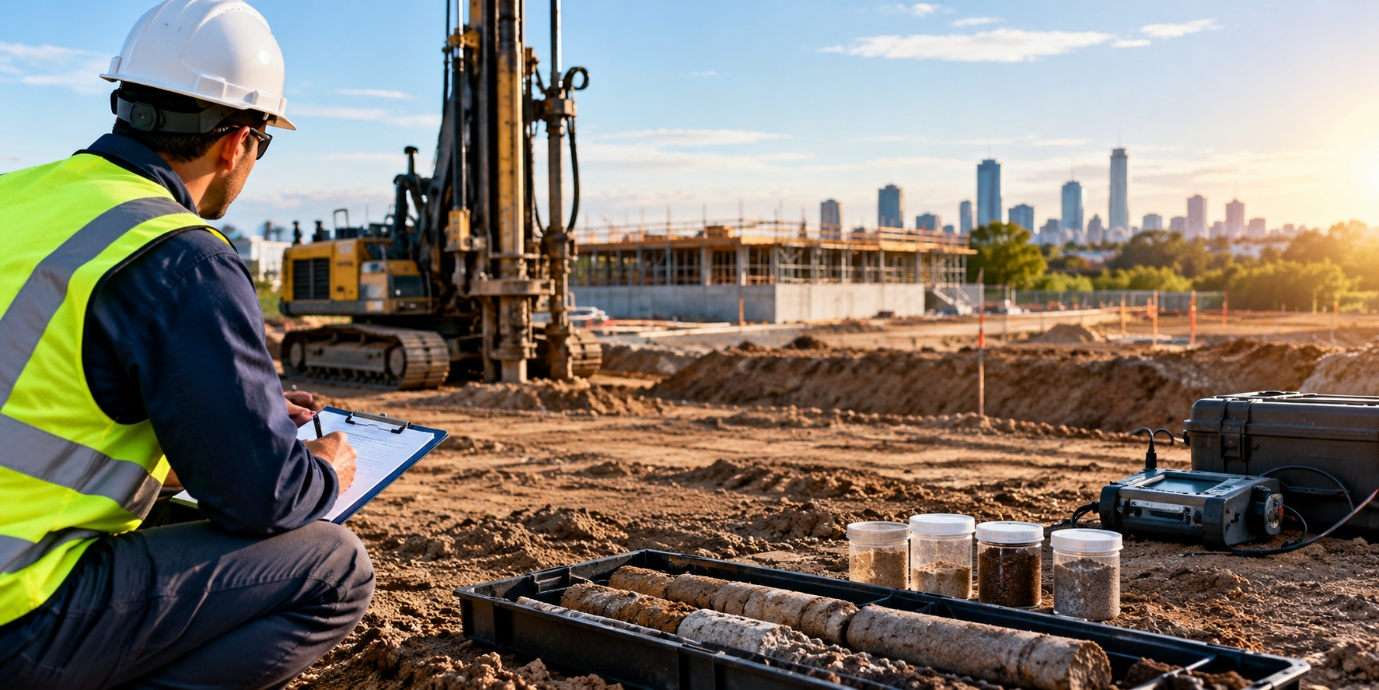
Ground investigation is the process of examining and testing the ground to understand its physical properties and suitability for a proposed project. The investigation may include reviewing available site information, drilling boreholes, collecting soil samples and conducting field or laboratory tests.

The investigation required depends on the building design, site conditions, ground variability and applicable engineering requirements. A small residential project may need a different level of investigation from a large commercial development.

The findings can help engineers assess soil strength, compressibility, groundwater conditions and other characteristics that influence foundation selection and construction methods.

Why Should You Test the Ground Before Building?

Testing the ground before construction provides useful information for planning and risk management. Without adequate investigation, unexpected soil conditions may lead to foundation movement, construction delays or additional expenses.

Important reasons to investigate the ground include:

  • Understand soil strength: Determine whether the soil can provide suitable support for the proposed foundation.
  • Identify variable soil layers: Different layers may respond differently to building loads.
  • Assess groundwater conditions: Water levels can affect excavation, drainage and construction activities.
  • Support foundation design: Engineers can use investigation results when selecting an appropriate foundation system.
  • Reduce uncertainty: Early testing helps identify potential ground-related problems before construction progresses.

Ground investigation cannot eliminate every construction risk, but it helps the project team make decisions based on evidence rather than assumptions.

How Does Ground Testing Brisbane Help Construction Projects?

Ground testing methods are selected according to the site and project requirements.

Ground Testing Brisbane can involve several investigation methods, depending on the purpose of the assessment and the conditions encountered.

Common methods include:

  • Borehole investigation: Drilling into the ground to examine soil layers and, where appropriate, collect samples.
  • Soil sampling: Obtaining material for laboratory testing and further assessment.
  • Penetrometer testing: Evaluating resistance to penetration to help understand ground conditions.
  • Laboratory testing: Measuring relevant properties such as moisture content, particle size distribution or plasticity.
  • Groundwater assessment: Checking groundwater conditions where they may affect the proposed works.

Not every site requires every method. A geotechnical professional determines the appropriate testing program based on the project scope, site history and available information.

What Information Does Construction Soil Analysis Brisbane Provide?

Construction Soil Analysis Brisbane helps explain how the ground may behave under the loads and conditions associated with a proposed development. Depending on the investigation, the results may reveal soil classification, moisture conditions, bearing characteristics and other properties relevant to design.

This information helps engineers evaluate possible settlement, soil movement and foundation performance. For example, compressible soil may require additional consideration because it can deform under building loads. Expansive clay may change volume as moisture levels vary, potentially affecting foundations and nearby structures.

Soil analysis may also help identify fill material or inconsistent ground layers. However, the presence of a particular soil type does not automatically mean a site is unsuitable for construction. The implications must be assessed against the proposed structure and site-specific conditions.

Which Ground Conditions Can Affect a Building?

Several ground-related factors can influence the performance of a building over time. Understanding them before construction helps the project team select appropriate designs and construction methods.

  • Weak or compressible soil: May settle under structural loads.
  • Expansive clay: Can swell or shrink when moisture conditions change.
  • Uncontrolled fill: May contain inconsistent materials or have inadequate compaction.
  • Groundwater: Can affect excavations, drainage and soil behaviour.
  • Variable soil profiles: May create differences in foundation support across a site.
  • Erosion and drainage issues: Can affect ground stability if not properly managed.

Brisbane and surrounding areas contain varied geological and ground conditions. Therefore, information from a nearby property should not automatically be treated as proof of conditions at another site. A site-specific investigation is more reliable for design decisions.

How Does Ground Investigation Support Foundation Stability Assessment Brisbane?

A Foundation Stability Assessment Brisbane considers the ground conditions and how they interact with the proposed foundation and building loads. Ground investigation provides evidence that engineers can use to evaluate bearing capacity, possible settlement and other relevant foundation risks.

For example, a site with shallow, competent natural soil may present different foundation options from one containing deep fill or soft, compressible material. The final solution depends on the investigation results, structural requirements and engineering design.

Ground investigation can also support decisions about excavation depth, ground improvement or the possible need for deeper foundations. These measures are not automatically necessary on every site; they should be recommended only when justified by the evidence and design requirements.

What Is the Difference Between Ground Investigation and Building Foundation Inspection Brisbane?

Ground investigation and foundation inspection serve related but different purposes. Ground investigation examines the soil and ground conditions to inform design and planning. A Building Foundation Inspection Brisbane generally involves examining foundation-related work or existing foundation conditions, depending on the inspection scope.

Aspect Ground investigation Foundation inspection
Main purpose Understand ground conditions Examine foundation condition or construction
Typical timing Before design or construction, and when further investigation is needed During construction or after foundation concerns arise
Methods Boreholes, sampling and soil testing Visual checks, measurements and specified testing
Main outcome Ground data for engineering decisions Findings about the inspected foundation or work
Key limitation Does not guarantee future ground performance Cannot establish every underlying soil condition by inspection alone

The exact scope of either service depends on the project and the professional carrying out the work. Neither should be assumed to replace the other when both ground and structural concerns need assessment.

Ground Investigation Methods Compared

The following table outlines common methods and their practical uses. The appropriate combination depends on site conditions and project requirements.

Method Information obtained Potential benefit
Boreholes Soil layers and samples at depth Helps investigate deeper ground conditions
Soil sampling Material for classification and testing Supports a more detailed understanding of the soil
Penetrometer testing Resistance to penetration Helps assess relative ground resistance
Laboratory testing Selected physical or engineering properties Provides measured data for assessment
Groundwater monitoring Water levels and changes over time Helps inform excavation and groundwater management

No single test provides a complete picture of every site. Engineers interpret the results together with the proposed design, geological information and other relevant evidence.

When Should You Arrange Ground Investigation?

Ground investigation should generally be considered early enough to inform foundation design, budgeting and construction planning. Waiting until excavation begins may leave less time to respond to unexpected conditions.

Consider arranging an investigation when:

  • Planning a new home, commercial building or extension.
  • Developing land with an uncertain history or unknown fill.
  • Building on sloping ground or land with potential drainage concerns.
  • Investigating signs of settlement or previous ground movement.
  • Preparing engineering information for a proposed development.

The investigation scope should be agreed with the relevant geotechnical professional and design team. Local approval requirements and project-specific engineering standards should also be checked.

Arrange ground investigation before finalising foundation details wheever practicable. Share the proposed building plans, site levels and available property information with the geotechnical professional. This helps them plan relevant tests and provide findings that can inform the engineering design. Keep the resulting report available to your builder and structural engineer so recommendations can be considered before construction decisions are locked in.

How Can Geotest Group Help With Ground Investigation?

Ground investigation is an important step in understanding the conditions beneath a proposed building and planning suitable foundations. Building Foundation Inspection Brisbane may provide additional information about foundation work, while ground testing helps establish the soil conditions that influence design. By arranging the appropriate assessment early, property owners and builders can make better-informed decisions, manage uncertainty and plan construction more effectively with support from Geotest Group.

It provides information about soil strength, soil layers and groundwater conditions, helping engineers assess potential ground risks and design suitable foundations.

The investigation required depends on the project, site conditions and applicable requirements. Soil testing is an important source of information for residential foundation design, and the appropriate scope should be confirmed with the relevant professionals.

Depending on the site, testing may include boreholes, soil sampling, penetration tests, laboratory analysis and groundwater assessment.

It can help identify risks and inform foundation design, but it cannot guarantee that foundation problems will never occur. Construction quality, drainage, maintenance and changing ground conditions also matter.

It is generally best to investigate the site early, before foundation design is finalised and construction begins, so the findings can inform planning and engineering decisions.

Soil Failure

How Can Soil Strength Affect Your Building Plans

Planning a new home or commercial building requires careful consideration of the ground beneath the structure. A professional Soil Conditions Assessment Brisbane helps builders and engineers understand how the soil may respond to building loads, moisture changes and construction activities. Geotestgroup provides soil testing and geotechnical services to help property owners make informed decisions before construction begins.

Soil strength refers to the ground’s ability to resist forces without excessive deformation or failure. Different soils behave differently under pressure. Some can support loads effectively, while others may compress, shift or change volume as moisture conditions vary. A suitable investigation helps identify these characteristics and provides useful information for planning an appropriate foundation.

Why Does Soil Strength Matter Before Construction?

Every building transfers its weight through its foundations into the ground. If the underlying soil cannot support the expected loads adequately, excessive settlement or uneven movement may occur. These problems can affect floors, walls, doors and other structural elements.

A professional Soil Conditions Assessment Brisbane project helps identify relevant soil properties before foundation decisions are finalised. The findings can inform engineering assessments of bearing capacity, soil reactivity, groundwater conditions and the presence of fill.

Brisbane sites do not all have identical ground conditions. Soil profiles may vary between neighbouring properties, so assumptions based on nearby developments are not a substitute for investigating the actual building site.

How Does Weak Soil Affect Foundation Design?

Soil strength directly influences the foundation options that an engineer may consider. Depending on the site and proposed building, the design might involve a slab, footings or a deeper foundation system. The appropriate choice depends on the investigated ground conditions, structural loads and engineering requirements.

Weak or compressible soil may require additional investigation or a foundation design that distributes loads differently. Reactive clay can also expand and contract as its moisture content changes, potentially contributing to uneven foundation movement.

This is where Ground Testing Brisbane services become valuable. Field investigations and laboratory testing can provide evidence about the ground’s characteristics. Engineers can then use the results alongside building plans to develop suitable recommendations rather than relying on assumptions.

What Can Soil Testing Reveal About Your Building Site?

A geotechnical investigation examines the ground to a depth and extent appropriate for the proposed project. Depending on the site, methods may include hand augering, penetration testing, soil sampling and laboratory analysis.

The investigation may help identify:

  • Soil types and changes between different ground layers.
  • Soil strength and bearing characteristics relevant to foundation design.
  • Reactive soils that may move as moisture levels change.
  • Uncontrolled fill or compressible material requiring further assessment.
  • Groundwater conditions and possible drainage concerns.
  • Conditions that may affect excavation, earthworks or retaining structures.

Not every project needs every test. The scope should reflect the building type, site conditions and information required by the engineer.

How Does Soil Strength Influence Construction Costs?

Soil testing is an early planning expense, but the information it provides can help the project team identify potential ground-related challenges before major work begins. Unexpected soil conditions discovered during excavation may require further testing, design changes, additional earthworks or construction delays.

Construction Soil Analysis Brisbane can help clarify the characteristics of the site and support better-informed planning. For example, unsuitable fill may need further evaluation, while a site with changing soil layers may require additional investigation before a foundation design can be confirmed.

Testing cannot guarantee that a project will avoid additional costs. However, identifying relevant ground conditions early gives the builder and engineer an opportunity to consider them before construction progresses.

Soil Strength and Building Decisions: A Quick Comparison
Soil condition or finding Possible construction implication
Strong, suitable ground May support conventional foundation options, subject to engineering assessment
Soft or compressible soil May require settlement assessment and alternative foundation solutions
Reactive clay Foundation design may need to account for moisture-related ground movement
Uncontrolled fill Further testing or assessment may be needed to establish suitability
High groundwater May influence excavation, drainage and construction methods
Variable soil layers Additional investigation may be needed to understand changes in ground behaviour

These are general examples, not a diagnosis of any particular Brisbane property. The actual foundation solution must be determined from site-specific information and professional engineering advice.

Why Is Foundation Stability Assessment Important?

A Foundation Stability Assessment Brisbane service helps evaluate ground conditions relevant to the performance of a proposed or existing structure. The scope will depend on the project and may involve reviewing soil investigation results, foundation loading, slope conditions or signs of ground movement.

For a new development, this assessment can help the engineer understand whether the proposed foundation approach is appropriate for the investigated site. For an existing building, visible cracking, uneven floors or sticking doors may justify further professional assessment, although these signs can have causes other than soil movement.

A Building Foundation Inspection Brisbane service may also be relevant when investigating an existing foundation or reviewing particular site concerns. An inspection alone does not necessarily establish the cause of a problem; additional measurements, records or geotechnical investigations may be needed.

When Should You Arrange Ground Testing?

Ideally, arrange soil testing during the planning stage, before the foundation design is finalised. Early results give the engineer and builder time to review site conditions and identify whether further investigation is needed.

Consider seeking professional advice before:

  • Building a new home or commercial property.
  • Adding an extension that changes structural loads.
  • Constructing on a sloping block.
  • Building on land with a history of filling or ground disturbance.
  • Investigating unexplained foundation movement or settlement.

The required testing depends on the specific project. A qualified geotechnical professional can help establish an appropriate investigation scope.

Do not select a foundation system based only on the appearance of the land or the design used for a neighbouring property. Ask your builder or engineer what soil information is needed before approving the foundation design. Keep the soil report available to the relevant project professionals, and ensure any recommendations are considered during construction.

Good site drainage also matters. Changes in water flow, leaking pipes and inconsistent moisture around a building can contribute to ground movement in susceptible soils. Queensland’s building guidance recommends suitable footing design and attention to drainage to help reduce subsidence risks.

Make Informed Building Decisions with Geotest Group

Soil strength is an important part of construction planning because it affects how loads are transferred into the ground and how foundations may respond to changing site conditions. Understanding the soil early can help identify potential challenges, support engineering decisions and improve construction planning.

Understanding ground conditions is an important step towards making informed foundation and construction decisions. A Soil Conditions Assessment Brisbane can help identify potential ground-related challenges and provide useful information for engineers and builders. Geotest group offers soil testing and geotechnical services across Brisbane and South East Queensland to support site-specific construction planning. Contact Geotest group to discuss the soil investigation requirements for your building project.

Soil strength helps determine how the ground supports building loads. Understanding it can help engineers assess foundation options and potential settlement risks.

Depending on the investigation, soil testing may examine soil type, strength, reactivity, moisture conditions, groundwater and the presence of fill.

Weak or compressible soil can contribute to excessive settlement or movement. The actual risk depends on the ground conditions, building loads and foundation design.

Arrange an assessment during early project planning, ideally before the foundation design is finalised. Additional testing may be needed if unexpected conditions are identified.

No. Soil testing helps inform foundation design but cannot eliminate every cause of cracking or movement. Construction quality, drainage, maintenance and other factors also matter.

Soil Failure

Can Soil Testing Brisbane Identify Hidden Ground Risks?

 Building a home, commercial property or other structure starts with one important question: what is underneath the site? The ground may look stable from the surface, but hidden soil conditions can create serious construction challenges. Soil Testing Brisbane helps property owners, builders and engineers understand what is happening beneath the ground before construction begins.

A professional soil investigation can reveal information about soil type, strength, moisture, drainage, movement and other characteristics that may influence the way a building should be designed. Identifying these conditions early can help reduce unexpected problems, construction delays and additional costs.

Why Can Ground Risks Remain Hidden?

 A building site can appear completely normal while having different soil layers underneath. Soil conditions can change significantly across a single property. One section may contain firm natural soil, while another may have loose fill, reactive clay or poorly compacted material.

Some risks are difficult to identify through a simple visual inspection. Without appropriate testing, important ground conditions may remain unknown until excavation or foundation work begins.

Common hidden conditions may include:

  • Reactive or expansive clay
  • Loose or poorly compacted soil
  • Uncontrolled fill
  • Soft or weak soil layers
  • High moisture levels
  • Poor drainage conditions
  • Variable soil profiles
  • Ground movement potential
  • Conditions affecting foundation stability

This is why Brisbane soil testing can be an important part of the planning process.

 What Hidden Risks Can Soil Testing Identify?

Professional soil testing services Brisbane can provide useful information about the physical characteristics of the ground. The exact tests required depend on the property, proposed development and site conditions.

1. Reactive Soil

Some soils can expand when they absorb moisture and shrink when they dry. This repeated movement may place stress on foundations and building structures.

Identifying reactive soil before construction allows engineers to consider suitable foundation solutions for the site. 

2. Weak or Unstable Soil

Soil with insufficient bearing capacity may not provide adequate support for a proposed structure. If weak layers are present, foundation design may need to account for these conditions.

Geotechnical soil testing Brisbane can help determine whether the ground has characteristics that could affect structural support.

3. Uncontrolled Fill

Previously disturbed sites may contain fill material from earlier construction or landscaping work. If fill has not been properly placed and compacted, it may behave differently from natural ground.

Testing can help identify the nature and condition of fill so that appropriate construction decisions can be made.

4. Moisture and Drainage Concerns

Water within or around the soil can influence its behaviour. Poor drainage may contribute to changes in soil moisture, particularly around foundations.

A detailed soil investigation Brisbane can provide valuable information about site conditions and help identify factors that may need consideration during design and construction.

5. Variable Soil Layers

A site may contain several soil layers with different properties. For example, topsoil may sit above clay, sand, gravel or fill.

Understanding these layers is important because foundations interact with the underlying ground, not simply the soil visible at the surface.

How Does Soil Testing Help Before Construction?

The main benefit of ground testing Brisbane is better information before major construction decisions are made.

A typical investigation may involve collecting soil samples or conducting field tests at selected locations across the site. The results can then be assessed to understand relevant soil characteristics.

The findings may contribute to a soil report Brisbane, which can help builders, engineers and property owners understand the conditions identified during the investigation.

This information can support decisions involving:

  • Foundation design
  • Site preparation
  • Excavation
  • Soil classification
  • Drainage considerations
  • Construction planning
  • Potential ground movement
  • Appropriate engineering recommendations

Can Soil Testing Prevent Construction Problems?

Soil testing cannot eliminate every construction risk, but it can reduce uncertainty by identifying relevant ground conditions before construction progresses too far.

For example, discovering problematic soil after foundations have already been designed may require changes to the construction approach. In some cases, unexpected ground conditions can lead to additional excavation, redesign, delays or increased costs.

Early foundation soil testing gives project professionals useful information during the planning stage rather than discovering important conditions unexpectedly during construction.

Why Brisbane Sites Need Proper Soil Investigation

Brisbane properties can have varying ground conditions depending on location, previous land use, drainage, geology and other site-specific factors. Two nearby properties can have different soil characteristics.

Previous earthworks can also influence what lies beneath a site. A block that has been levelled or filled may have a different subsurface profile from its surrounding properties.

Because ground conditions are site-specific, relying only on assumptions or neighbouring property information may not provide enough certainty for a new construction project.

Professional soil conditions Brisbane assessments can provide site-specific information that is more useful for planning.

When Should Soil Testing Be Completed?

Ideally, soil testing should be arranged during the early planning stages, before foundation design and construction decisions are finalised.

Early testing gives the relevant professionals time to review the results and consider the site’s characteristics. It can also help identify whether further investigation may be appropriate.

For homeowners, developers and builders, arranging testing early can make the construction process more predictable.

What Happens After the Testing?

Once testing is completed, the results are assessed and documented. Depending on the type of investigation, the resulting report may describe soil characteristics, test results and relevant site observations.

The report can then be provided to the appropriate building or engineering professionals for consideration during project planning.

If unusual or potentially challenging ground conditions are identified, further assessment may be recommended before construction proceeds.

Choose Professional Soil Testing for Better Planning

 A successful building project depends on more than the visible features of a block. What lies beneath the surface can influence foundation design, site preparation and construction performance.

Professional testing provides useful information about the ground before construction begins. Instead of relying on assumptions, property owners and builders can make decisions based on site-specific findings.

If you are planning a residential or commercial project, consider arranging Soil Testing Brisbane through a qualified testing provider

Yes, testing can identify soil characteristics and conditions that may affect foundations, stability and construction planning.

It helps identify site-specific ground conditions before foundation and construction decisions are finalised.

Yes, appropriate testing can assess soil behaviour and help determine whether reactive soil conditions are present.

No, soil conditions can vary between properties due to geology, previous earthworks, drainage and other site factors.

Soil testing is best arranged early in the planning process, before foundation design and construction begin.