
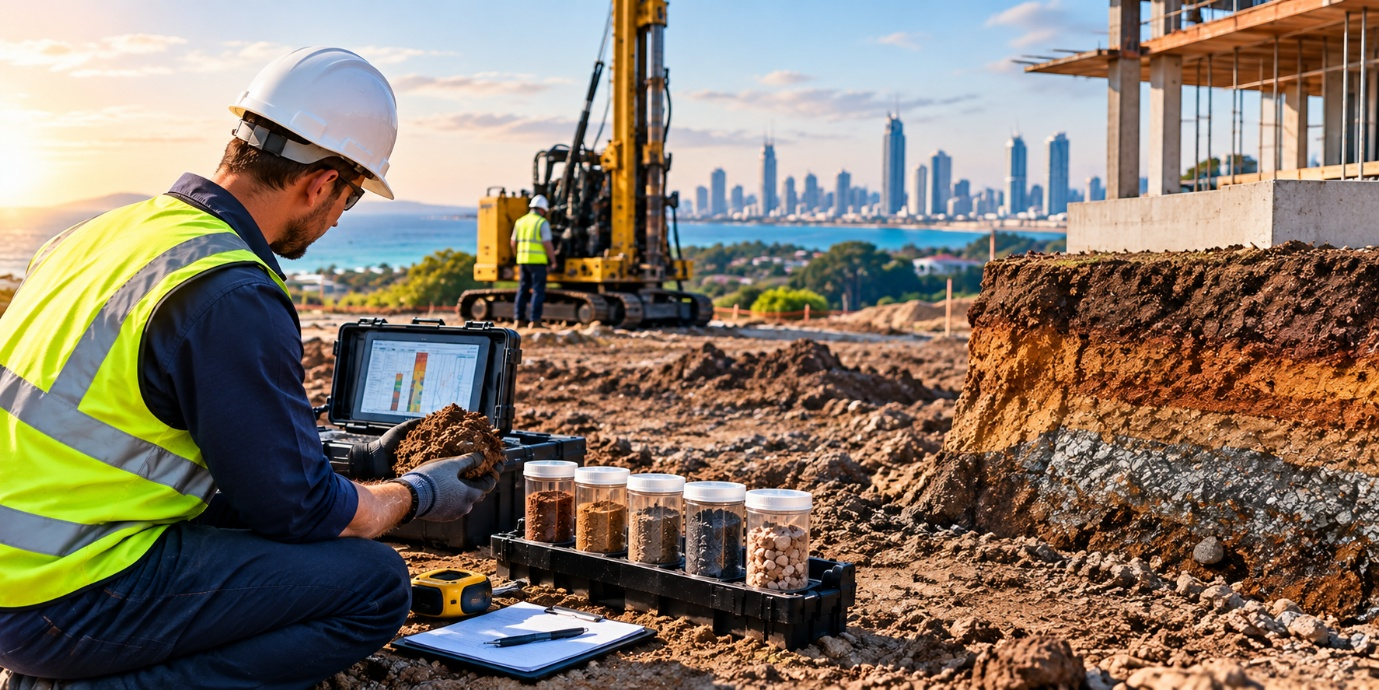
Building a safe and stable structure begins with understanding the ground beneath it. Soil conditions can affect foundation strength, drainage, settlement and the long-term performance of a building. Without proper investigation, unexpected ground conditions may create costly delays and structural problems. Soil Testing Gold Coast helps builders, homeowners and developers understand the characteristics of the ground before construction begins. With reliable soil information, construction teams can make better decisions and plan projects with greater confidence.
Why Is Soil Testing Important Before Construction?
Every construction site has different ground conditions. Some areas have firm, stable soil, while others may contain loose sand, soft clay, fill material or soil that holds too much moisture. These differences can influence how a building should be designed and supported.
The Importance Of Soil Testing lies in identifying potential ground-related risks before they affect the project. Testing helps engineers assess whether the soil can support the expected loads and whether additional investigation or foundation measures may be necessary.
For residential homes, commercial buildings and other developments, understanding these conditions early can help prevent avoidable problems during construction and throughout the building’s service life.
How Does Soil Testing Help Design Strong Foundations?
Foundations transfer the weight of a building into the ground. If the soil cannot safely support that load, the structure may experience excessive settlement, cracking or movement.
Soil Testing For Construction provides useful information about soil strength, composition and other engineering properties. Geotechnical professionals use this information to help determine suitable foundation solutions for the proposed structure.
Depending on the site conditions, a foundation may require a particular footing design, additional ground preparation or other engineering measures. The correct solution depends on the test results, building loads and relevant design requirements.
By understanding the ground before construction starts, project teams can reduce uncertainty and make informed foundation decisions rather than relying on assumptions.
What Risks Can Construction Site Soil Testing Identify?
Ground-related issues are not always visible from the surface. A site may appear level and suitable for building while containing weaker soil layers below ground.
Construction Site Soil Testing can help investigate conditions that may affect building safety and performance, including:
- Low soil bearing capacity that may affect foundation support.
- lose or compressible soil that could contribute to settlement.
- Expansive clay that may shrink or swell with moisture changes.
- Poor drainage conditions that may affect the ground around foundations.
- Uncontrolled fill or variable soil layers that require further assessment.
Identifying these issues early gives engineers and builders an opportunity to plan suitable responses. Depending on the findings, further testing, ground improvement or a revised foundation design may be recommended.
How Does Soil Investigation Support Building Projects?
A successful construction project depends on accurate information at the planning stage. Soil investigation helps project teams understand the site’s subsurface conditions before selecting construction methods and foundation designs.
Soil Investigation For Building Projects may involve drilling boreholes, collecting soil samples, conducting field tests and arranging laboratory analysis. The investigation method depends on the proposed development, site conditions and applicable engineering requirements.
The findings help geotechnical engineers assess ground behaviour and provide recommendations relevant to the project. This information can also help identify areas that need additional attention before excavation or foundation installation begins.
For developers and homeowners, early investigation can improve project planning, reduce unexpected ground-related expenses and support better communication between builders, engineers and other professionals.
What Role Does Geotechnical Soil Testing Play in Safety?
Geotechnical engineering focuses on how soil and rock interact with structures. Testing provides the technical information needed to evaluate these interactions and assess potential construction risks.
Geotechnical Soil Testing may examine properties such as moisture content, soil classification, density, shear strength and plasticity, depending on the investigation requirements.
These results help engineers understand how the ground may respond to structural loads and changing environmental conditions. They can also inform decisions about excavation stability, retaining structures, drainage and foundation performance where relevant.
Testing alone does not guarantee that a building will be safe. The results must be interpreted by qualified professionals and incorporated into appropriate engineering design, construction practices and site-specific recommendations.
Why Should Gold Coast Property Owners Test Their Soil?
Construction sites across the Gold Coast can have varying soil profiles, drainage conditions and levels of ground stability. Conditions may differ between neighbouring properties, making it important to assess each site individually.
Soil Testing Gold Coast services can help property owners and construction professionals obtain information about their specific site before committing to foundation work.
Soil testing is particularly valuable when planning a new home, an extension, a commercial development or another project that requires reliable foundation support. It can help identify potential concerns early and provide information needed for suitable engineering decisions.
Working with an experienced geotechnical provider such as GeoTest Group can help project teams understand their ground conditions and determine the appropriate next steps. The scope of testing should always match the proposed building and the requirements of the project.
When Should Soil Testing Be Carried Out?
Ideally, soil testing should be arranged during the early planning stages, before the foundation design is finalised. This allows engineers to use the results when selecting suitable foundation systems and construction methods.
Testing may also be necessary when ground conditions change, unexpected soil is encountered during excavation or an existing structure shows signs of settlement. In these situations, further investigation can help professionals identify possible causes and recommend appropriate action.
Arranging testing early generally gives project teams more time to respond to the findings without unnecessary disruption to construction schedules.
Build With Confidence Through Proper Soil Investigation
A strong building starts with a clear understanding of the ground beneath it. Soil testing helps identify potential risks, supports informed foundation design and gives construction professionals valuable information for planning safer projects. Although no single test can eliminate every construction risk, appropriate investigation can reduce uncertainty and improve decision-making.
For anyone planning a building project, Soil Testing Gold Coast is an important step towards understanding site conditions and supporting long-term structural stability. GeoTest Group provides soil testing services to help construction professionals and property owners make informed decisions based on their site’s ground conditions.
Soil testing identifies ground conditions that may affect foundation strength, settlement and building stability.
It helps engineers identify potential ground risks and select suitable foundation designs and construction methods.
It may assess soil composition, strength, moisture, density and other properties relevant to the proposed project.
It should generally be arranged during the early planning stage, before the foundation design is finalised.
GeoTest Group provides soil testing services to help property owners and construction professionals assess site conditions.
