
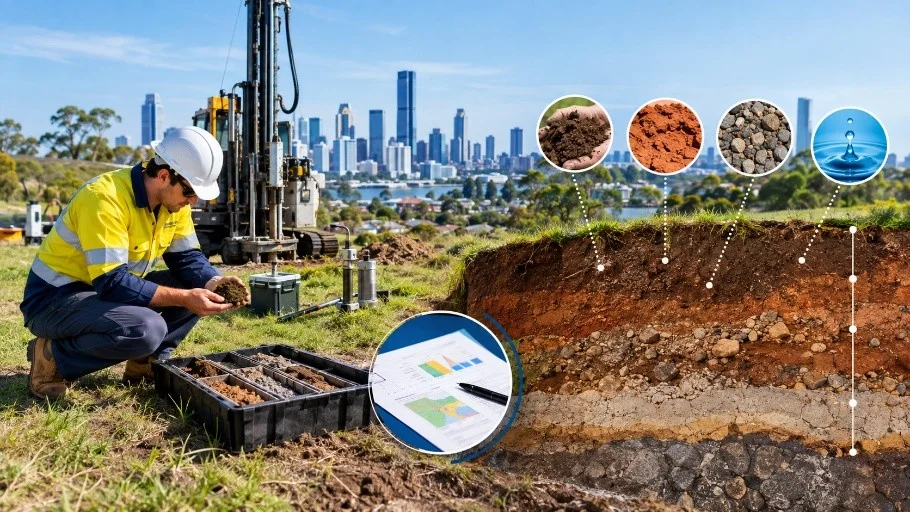
Soil Failure

What Does Soil Testing Brisbane Reveal About Your Land?

Before starting any construction project, it is important to understand what is beneath the surface. Soil Testing Brisbane provides valuable information about the condition, composition and strength of the ground on your property. While a site may look stable from the surface, the soil underneath can contain different layers, moisture conditions or other characteristics that may affect construction.

A professional soil assessment helps builders, engineers and property owners make informed decisions before construction begins. It can identify potential ground conditions early and provide information needed to design a suitable foundation.

Why Is Soil Testing Important Before Construction?

Every block of land is different. Two properties located only a short distance apart can have completely different soil conditions. Factors such as previous land use, drainage, natural geology and filling can influence what is found beneath the surface.

Soil testing for construction helps determine whether the ground is suitable for the proposed structure. The results can help engineers understand how the soil may behave when a building places additional weight on it.

Without adequate information about the ground, unexpected soil conditions may lead to changes during construction. These changes can increase costs, delay the project and create unnecessary complications.

What Can Soil Testing Brisbane Reveal?

A professional soil investigation can provide several important insights about your property.

1. Soil Composition

One of the first things a soil test can reveal is what type of material exists beneath the site. Depending on the location, the ground may contain clay, sand, silt, gravel, rock or a combination of different materials.

Understanding soil composition helps professionals assess how the ground is likely to respond to construction and environmental changes.

2. Soil Strength

The strength of the ground is an important consideration when designing foundations. Soil that can support loads effectively may require a different foundation approach from weaker or highly reactive soil.

Testing can provide information about soil bearing capacity, helping engineers select an appropriate foundation design for the planned structure.

3. Soil Classification

Soil classification provides a standard way of describing the characteristics and expected behaviour of soil at a building site.

A soil classification Brisbane assessment can help identify characteristics such as soil reactivity and other conditions that may influence foundation movement.

This information is particularly useful for residential construction because foundation designs need to account for how the ground may respond over time.

4. Moisture Conditions

Water can significantly influence soil behaviour. Some soils can change their volume as moisture levels increase or decrease.

A professional site soil assessment can provide information about moisture-related conditions that may need to be considered during the planning and construction process.

Drainage, groundwater and surface water can also influence site conditions, making moisture assessment an important part of understanding the ground.

5. Ground Conditions and Soil Layers

Soil is not always consistent from the surface to deeper levels. A site may contain several layers, with each layer having different characteristics.

Geotechnical soil testing Brisbane can help identify variations between these layers. Engineers can then use the findings when assessing foundation requirements and other aspects of structural design.

Can Soil Testing Identify Potential Building Risks?

Yes, soil testing can help identify ground conditions that could create challenges for construction.

Potential concerns may include highly reactive soils, uncontrolled fill, variable ground conditions, poor drainage or low-strength materials. Identifying these conditions before construction gives the project team an opportunity to plan appropriately.

For example, if testing identifies soil with significant movement potential, an engineer can consider this information when developing the foundation design.

The goal is not simply to find problems. A good soil investigation Brisbane process provides useful information that allows the construction team to work with the actual conditions of the site.

What Is Included in a Soil Report Brisbane?

After testing and assessment, the findings are generally presented in a report. A soil report Brisbane may contain information about the tested soil, site conditions, classification and recommendations relevant to the proposed construction.

The exact contents depend on the type of investigation and project requirements.

For homeowners, the report can provide a clearer understanding of the land. For builders and engineers, it can provide technical information that supports decisions about foundation and construction requirements.

Why Is Soil Testing Useful for Homeowners?

You do not need to be a construction professional to benefit from understanding your soil.

If you are planning to build a new home, extension, retaining wall or another structure, knowing the ground conditions can help you prepare for the project.

A building soil test Brisbane service can provide information that may be needed by engineers and other construction professionals before finalising designs.

It can also help property owners avoid making decisions based only on what can be seen at ground level. Soil conditions are hidden, so testing provides evidence about what is actually beneath the site.

When Should You Arrange Soil Testing?

Ideally, soil testing should be arranged during the planning stage, before construction work begins.

Early testing gives engineers and builders time to review the findings and account for the site conditions in the project design. Waiting until construction is underway may make it more difficult and expensive to respond to unexpected ground conditions.

For new residential construction, arranging foundation soil testing early can be an important step toward understanding what the proposed building will be constructed on.

How Does Soil Testing Support Better Construction Decisions?

Good construction starts with good information. Soil testing provides data that can help engineers make decisions based on the actual conditions of the site rather than assumptions.

The findings may influence foundation selection, site preparation, drainage considerations and other engineering decisions.

This can make the planning process more predictable and reduce the likelihood of surprises caused by unknown ground conditions.

It is also important to remember that soil testing does not replace professional engineering design. Instead, the results provide essential ground information that engineers can use as part of the broader design process.

Choose Professional Soil Testing for Your Brisbane Property

 Every property has its own ground conditions, and those conditions can have a major influence on construction. From soil composition and strength to moisture and classification, testing can reveal information that cannot be determined simply by looking at the surface.

Whether you are planning a new home or another construction project Soil Testing Brisbane can give you a clearer understanding of your land and help your project team make informed decisions from the beginning.

Soil testing can reveal soil type, strength, classification, moisture conditions and other ground characteristics relevant to construction.

Yes, soil testing provides important ground information that can help engineers design suitable foundations for a building.

A soil report Brisbane document summarises relevant soil and site findings from the investigation and testing process.

Yes, testing can help identify soil characteristics such as reactivity that may influence foundation design.

Soil testing is best completed during the planning stage, before construction and foundation design are finalised.

Soil Failure

Can Soil Testing Brisbane Identify Hidden Ground Risks?

 Building a home, commercial property or other structure starts with one important question: what is underneath the site? The ground may look stable from the surface, but hidden soil conditions can create serious construction challenges. Soil Testing Brisbane helps property owners, builders and engineers understand what is happening beneath the ground before construction begins.

A professional soil investigation can reveal information about soil type, strength, moisture, drainage, movement and other characteristics that may influence the way a building should be designed. Identifying these conditions early can help reduce unexpected problems, construction delays and additional costs.

Why Can Ground Risks Remain Hidden?

 A building site can appear completely normal while having different soil layers underneath. Soil conditions can change significantly across a single property. One section may contain firm natural soil, while another may have loose fill, reactive clay or poorly compacted material.

Some risks are difficult to identify through a simple visual inspection. Without appropriate testing, important ground conditions may remain unknown until excavation or foundation work begins.

Common hidden conditions may include:

  • Reactive or expansive clay
  • Loose or poorly compacted soil
  • Uncontrolled fill
  • Soft or weak soil layers
  • High moisture levels
  • Poor drainage conditions
  • Variable soil profiles
  • Ground movement potential
  • Conditions affecting foundation stability

This is why Brisbane soil testing can be an important part of the planning process.

 What Hidden Risks Can Soil Testing Identify?

Professional soil testing services Brisbane can provide useful information about the physical characteristics of the ground. The exact tests required depend on the property, proposed development and site conditions.

1. Reactive Soil

Some soils can expand when they absorb moisture and shrink when they dry. This repeated movement may place stress on foundations and building structures.

Identifying reactive soil before construction allows engineers to consider suitable foundation solutions for the site. 

2. Weak or Unstable Soil

Soil with insufficient bearing capacity may not provide adequate support for a proposed structure. If weak layers are present, foundation design may need to account for these conditions.

Geotechnical soil testing Brisbane can help determine whether the ground has characteristics that could affect structural support.

3. Uncontrolled Fill

Previously disturbed sites may contain fill material from earlier construction or landscaping work. If fill has not been properly placed and compacted, it may behave differently from natural ground.

Testing can help identify the nature and condition of fill so that appropriate construction decisions can be made.

4. Moisture and Drainage Concerns

Water within or around the soil can influence its behaviour. Poor drainage may contribute to changes in soil moisture, particularly around foundations.

A detailed soil investigation Brisbane can provide valuable information about site conditions and help identify factors that may need consideration during design and construction.

5. Variable Soil Layers

A site may contain several soil layers with different properties. For example, topsoil may sit above clay, sand, gravel or fill.

Understanding these layers is important because foundations interact with the underlying ground, not simply the soil visible at the surface.

How Does Soil Testing Help Before Construction?

The main benefit of ground testing Brisbane is better information before major construction decisions are made.

A typical investigation may involve collecting soil samples or conducting field tests at selected locations across the site. The results can then be assessed to understand relevant soil characteristics.

The findings may contribute to a soil report Brisbane, which can help builders, engineers and property owners understand the conditions identified during the investigation.

This information can support decisions involving:

  • Foundation design
  • Site preparation
  • Excavation
  • Soil classification
  • Drainage considerations
  • Construction planning
  • Potential ground movement
  • Appropriate engineering recommendations

Can Soil Testing Prevent Construction Problems?

Soil testing cannot eliminate every construction risk, but it can reduce uncertainty by identifying relevant ground conditions before construction progresses too far.

For example, discovering problematic soil after foundations have already been designed may require changes to the construction approach. In some cases, unexpected ground conditions can lead to additional excavation, redesign, delays or increased costs.

Early foundation soil testing gives project professionals useful information during the planning stage rather than discovering important conditions unexpectedly during construction.

Why Brisbane Sites Need Proper Soil Investigation

Brisbane properties can have varying ground conditions depending on location, previous land use, drainage, geology and other site-specific factors. Two nearby properties can have different soil characteristics.

Previous earthworks can also influence what lies beneath a site. A block that has been levelled or filled may have a different subsurface profile from its surrounding properties.

Because ground conditions are site-specific, relying only on assumptions or neighbouring property information may not provide enough certainty for a new construction project.

Professional soil conditions Brisbane assessments can provide site-specific information that is more useful for planning.

When Should Soil Testing Be Completed?

Ideally, soil testing should be arranged during the early planning stages, before foundation design and construction decisions are finalised.

Early testing gives the relevant professionals time to review the results and consider the site’s characteristics. It can also help identify whether further investigation may be appropriate.

For homeowners, developers and builders, arranging testing early can make the construction process more predictable.

What Happens After the Testing?

Once testing is completed, the results are assessed and documented. Depending on the type of investigation, the resulting report may describe soil characteristics, test results and relevant site observations.

The report can then be provided to the appropriate building or engineering professionals for consideration during project planning.

If unusual or potentially challenging ground conditions are identified, further assessment may be recommended before construction proceeds.

Choose Professional Soil Testing for Better Planning

 A successful building project depends on more than the visible features of a block. What lies beneath the surface can influence foundation design, site preparation and construction performance.

Professional testing provides useful information about the ground before construction begins. Instead of relying on assumptions, property owners and builders can make decisions based on site-specific findings.

If you are planning a residential or commercial project, consider arranging Soil Testing Brisbane through a qualified testing provider

Yes, testing can identify soil characteristics and conditions that may affect foundations, stability and construction planning.

It helps identify site-specific ground conditions before foundation and construction decisions are finalised.

Yes, appropriate testing can assess soil behaviour and help determine whether reactive soil conditions are present.

No, soil conditions can vary between properties due to geology, previous earthworks, drainage and other site factors.

Soil testing is best arranged early in the planning process, before foundation design and construction begin.

Soil Failure

What Are Engineers Looking For During Soil Testing Brisbane?

When engineers assess a construction site, they need to understand what is happening beneath the surface before foundation and structural decisions are made. Soil can vary significantly from one property to another, and factors such as clay content, moisture, density, bearing capacity and previous site disturbance can affect how a building performs over time. This is why Soil Testing Brisbane is an important step before construction begins.

Professional GeoTest Group provides engineers with information about the ground conditions at a proposed development site. Through field investigations, soil sampling and laboratory testing, engineers can identify characteristics that may influence foundation design, earthworks, drainage and overall construction planning.

Why Is Soil Testing Important Before Construction?

 A building foundation transfers the weight of the structure into the ground. If the underlying soil is weak, highly reactive, poorly compacted or affected by moisture changes, the foundation may experience movement or settlement.

This is where Soil Investigation Brisbane becomes valuable. Rather than relying on assumptions about the ground, engineers can use actual site and laboratory information to understand the conditions beneath the proposed building area.

A professional investigation may help determine:

  • The type and consistency of soil
  • Soil reactivity
  • Bearing capacity
  • Moisture conditions
  • Density and compaction
  • Potential settlement
  • Presence of fill
  • Groundwater conditions
  • Slope stability
  • Foundation considerations

The exact testing requirements depend on the type of project, site conditions and proposed structure.

What Are Engineers Looking For During Soil Testing?

1. Soil Type and Composition

One of the first things engineers examine is the type of soil present at different depths.

A site may contain clay, sand, silt, gravel, fill or weathered rock. These materials have different engineering properties and respond differently to building loads and changes in moisture.

During Brisbane Soil Testing, soil samples can be collected from selected locations and depths to help establish the site’s soil profile.

2. Soil Reactivity

Soil reactivity is a major consideration for many residential construction projects.

Some clay soils expand when they absorb water and shrink when they dry. Repeated wetting and drying can cause movement beneath a building.

Engineers assess soil characteristics that indicate the potential for this type of movement. The findings can contribute to site classification and foundation recommendations.

Professional Foundation Soil Testing Brisbane can therefore provide useful information before decisions about slabs, footings and other foundation systems are finalised.

3. Bearing Capacity

Engineers need to know whether the ground can support the proposed building without excessive deformation. Bearing capacity refers to the ability of soil to support loads transferred through the foundation. If the soil is weak or compressible, the proposed foundation system may need to be reconsidered. The results from Geotechnical Investigation Brisbane can help engineers understand the strength and condition of soil layers beneath the site.

4. Soil Density and Compaction

Soil density is another important factor. Loose or poorly compacted soil can compress when subjected to building loads. This can increase the risk of settlement after construction. Engineers pay particular attention to sites containing fill because fill materials may vary significantly in composition and compaction.

Soil Testing Services Brisbane can help identify ground conditions that may require additional assessment, compaction or other engineering measures.

5. Moisture Content

Water can significantly influence soil behaviour. Engineers may assess the moisture condition of soil samples to understand how water may affect strength, volume and stability. Moisture conditions can be particularly important for clay soils because changes in water content can contribute to expansion and shrinkage. Understanding the relationship between soil and moisture can help engineers make better-informed decisions about foundations and drainage.

6. Settlement Potential

Settlement occurs when soil compresses or moves under the weight of a structure.

Some settlement may occur naturally after construction, but excessive or uneven settlement can create problems. Possible signs can include cracks, uneven floors, sticking doors and other structural or building-related issues.

Engineers use information from Soil Investigation Brisbane to assess whether particular soil layers could present a settlement concern. Early identification gives the project team an opportunity to consider suitable engineering solutions before construction progresses.

7. Groundwater Conditions

Groundwater can also influence construction. Depending on the site, engineers may investigate groundwater conditions because water can affect excavation, soil strength, drainage and slope stability. A high groundwater level can create additional challenges during excavation and foundation construction. For larger developments, groundwater information may form part of a broader Geotechnical Testing Brisbane investigation.

8. Existing Fill and Disturbed Ground

Some properties have been altered by previous development, demolition, landscaping or earthworks. As a result, the ground beneath a site may contain fill rather than naturally deposited soil. Engineers look for evidence of fill because uncontrolled or variable fill can behave differently from natural ground. If unsuitable fill is identified, additional investigation may be required.

This is one reason why Brisbane Soil Testing should be carried out before foundation decisions are finalised.

9. Slope Stability

Properties located on slopes require additional consideration.

Engineers may assess whether the existing slope is stable and whether proposed excavation, construction loads, drainage changes or retaining structures could affect stability. For these sites, Geotechnical Investigation Brisbane may include additional field investigation and engineering assessment. Slope-related information can help engineers and designers plan construction in a way that responds to the site’s ground conditions.

10. Foundation Suitability

Ultimately, many of the results obtained through soil testing are used to support foundation decisions. Engineers consider the soil profile, reactivity, strength, density, moisture and other characteristics when assessing foundation requirements. Foundation Soil Testing Brisbane can therefore play an important role in providing information needed for an appropriate foundation design. The purpose is not simply to collect soil samples. It is to understand how the ground is likely to behave when construction takes place.

Common Tests Used During Soil Investigation

The exact testing program varies from project to project. Engineers may use field investigation methods such as boreholes, hand augers, Dynamic Cone Penetrometer testing and soil sampling.

Laboratory testing may then be used to determine particular soil properties.

Some common areas investigated through Soil Testing Services Brisbane include:

Soil Factor What Engineers Want to Know Why It Matters
Soil type What materials exist below the site? Helps establish the soil profile
Reactivity How much could the soil move with moisture changes? Supports foundation planning
Bearing capacity How much load can the ground support? Influences foundation design
Density Is the soil loose or well compacted? Helps assess settlement risk
Moisture How much water is present in the soil? Influences soil behaviour
Settlement Could the ground compress under load? Helps reduce movement-related problems
Groundwater Is groundwater present and at what level? Supports excavation and drainage planning
Fill Has the site been previously disturbed? May require additional investigation
Slope stability Is the ground stable on sloping sites? Helps with safe development planning

 How Soil Testing Supports Foundation Design

 Soil testing and structural engineering work together. A structural engineer needs information about the ground when designing foundations. Soil test results can provide important information about soil strength, reactivity and other characteristics that may influence the design.

For example, if testing identifies reactive clay, the foundation design may need to account for potential ground movement. If testing identifies weak or poorly compacted material, engineers may need to investigate alternative foundation solutions or ground improvement options. This makes Geotechnical Testing Brisbane an important source of information for the wider construction team.

Why Local Soil Conditions Matter

 Brisbane has varied ground conditions, meaning that soil characteristics cannot always be assumed based only on the property’s location. Two nearby sites can have different soil profiles due to natural geological conditions, previous development, drainage patterns and changes in ground level.

Working with professionals experienced in Soil Testing Brisbane can help ensure that the investigation is designed around the actual characteristics of the site.

What Happens After Soil Testing?

After field investigation and laboratory testing are completed, the results are reviewed and interpreted by the geotechnical team.

The final report may include information about:

  • Soil profile
  • Site classification
  • Soil reactivity
  • Ground strength
  • Foundation considerations
  • Groundwater observations
  • Site-specific recommendations

The contents depend on the type and scope of investigation.

A Soil Report Brisbane prepared from appropriate site investigation data can then be provided to the relevant members of the construction team.

The report can help structural engineers, builders and other professionals understand the site’s ground conditions when planning the project.

 Engineers look at much more than the colour or appearance of soil during a site investigation. They assess soil type, reactivity, bearing capacity, density, moisture, settlement potential, groundwater, fill and slope stability to understand how the ground may behave under construction loads.

Professional Soil Testing Brisbane provides the ground information needed to support informed foundation and construction decisions. Whether you are building a new home, developing a property or planning a larger project, arranging a suitable soil investigation early can help your project team identify potential ground-related issues before construction begins.

Engineers commonly assess soil type, reactivity, bearing capacity, density, moisture, settlement potential, groundwater, fill and other ground conditions that could influence construction.

Reactive clay can expand when wet and shrink when dry. These changes can cause ground movement, which may affect foundations and building structures.

No. Testing requirements depend on the proposed building, soil conditions, slope, existing fill, site history and overall project complexity.

Soil testing provides information about ground strength, soil movement and other characteristics. Engineers can use these findings when assessing suitable foundation options.

Soil testing should generally be arranged during the planning and design stage, before foundation and structural decisions have been finalised.

Soil Failure

Expert Guide to Soil Testing Brisbane for Residential and Commercial Projects

If you’re planning to build a house, extend your property, or start a commercial project in Brisbane, there’s one step you simply cannot skip — Soil Testing Brisbane. The ground beneath your feet decides how safe, stable, and long-lasting your structure will be. Skipping this step can lead to cracked walls, uneven flooring, and expensive repairs down the line.

Many property owners assume soil is soil — but in reality, ground conditions can change dramatically from one street to the next, even within the same Brisbane suburb. That’s why relying on guesswork instead of proper testing can turn into a costly mistake.

In this guide, we’ll walk you through everything you need to know about soil testing, why it matters, and how to choose the right team for the job.

Why Soil Testing Matters Before You Build

Brisbane has a mix of soil types, from reactive clay to sandy and rocky ground. Each type behaves differently when it rains, dries out, or carries weight. Without proper testing, builders are basically guessing how the foundation will perform over time.

Geotechnical Soil Testing Brisbane helps engineers understand:

  • How much weight the soil can safely support
  • Whether the ground will expand or shrink with moisture changes
  • The depth needed for footings and foundations
  • Any risk of erosion, water table issues, or soil contamination

This information becomes the base for your entire construction design. A small investment in testing now can save you from major structural problems later.

Residential vs Commercial Soil Testing

Whether you’re building a single-family home or a large commercial complex, the process differs slightly, but the goal remains the same — a safe and stable structure.

For Residential Projects

Homeowners often need soil testing before:

  • Building a new house
  • Adding a granny flat or extension
  • Installing a swimming pool
  • Fixing drainage or retaining wall issues

A Soil Investigation Brisbane report gives homeowners clarity on foundation design, helping avoid future cracks or subsidence problems.

For Commercial Projects

Larger developments have more complex requirements. Construction Soil Testing Brisbane for commercial sites usually includes deeper bore testing, load-bearing analysis, and environmental assessments, especially if the site was previously used for industrial purposes.

Commercial builders rely heavily on accurate soil data because even a small design error can affect the safety of the entire building and increase construction costs.

What Happens During a Soil Test?

A typical soil testing process includes these steps:

  1. Site Inspection – Engineers visit the site to check the layout and access points.
  2. Bore Hole Drilling – Samples are collected from different depths.
  3. Lab Analysis – Soil samples are tested for strength, moisture content, and classification.
  4. Report Preparation – A detailed geotechnical report is prepared with foundation recommendations.

This report is often required by councils and builders before approving your construction plans.

Common Soil Types Found in Brisbane

Brisbane’s soil can vary a lot even within the same suburb. Some common types include:

  • Reactive Clay – Expands and contracts with moisture, common cause of foundation movement
  • Sandy Soil – Drains well but may need extra compaction
  • Rocky Ground – Strong but can increase excavation costs
  • Fill Soil – Man-made soil layers that may need special foundation design

Understanding your soil type helps engineers recommend the right footing system, whether it’s a standard slab, screw piles, or raised footings.

How to Choose the Right Soil Testing Company

Not all testing providers offer the same quality of service. When choosing a Soil Testing Company Brisbane, keep these points in mind:

  • Check if they are NATA-accredited for lab testing
  • Look for experience in both residential and commercial projects
  • Ask for sample reports to understand their reporting style
  • Confirm turnaround time, as delays can push back your project timeline
  • Read reviews from previous clients in Brisbane

A reliable company doesn’t just test the soil — they explain the results clearly and guide you on the next steps for your build.

Benefits of Getting Professional Soil Testing

Here’s why proper soil testing pays off in the long run:

  • Prevents structural damage caused by unstable ground
  • Helps architects design accurate foundation plans
  • Reduces the risk of costly repairs after construction
  • Speeds up council approval processes
  • Gives peace of mind to homeowners and developers alike

Skipping this step to save money upfront often ends up costing much more later, especially if foundation issues appear after construction is complete. Many property owners who skip this step end up paying far more in repairs, legal disputes, or redesign costs than they would have spent on a proper test in the first place.

Whether you’re building a dream home or a large commercial complex, Soil Testing Brisbane should always be your first step, not an afterthought. It protects your investment, ensures safety, and helps avoid unnecessary construction delays.

If you’re planning a project in Brisbane, working with an experienced and accredited soil testing team ensures your foundation starts on solid ground — quite literally.

It helps determine the soil’s strength and stability, ensuring a safe and long-lasting foundation.

Most residential soil tests are completed within 3 to 7 business days, depending on site access.

Yes, most councils require a soil report before approving building or extension plans.

Soil testing checks basic soil properties, while geotechnical investigation offers a deeper, detailed engineering analysis.

Costs vary based on project size, but residential tests are generally more affordable than commercial ones.

Uncategorized

Slope Stability Assessment in Brisbane for Residential and Commercial Projects

Brisbane’s hilly suburbs and rapidly growing construction zones make Slope Stability Assessment Brisbane one of the most important — and often overlooked — steps in any building project. Whether you’re building a home in The Gap, a commercial complex in Ferny Grove, or a retaining wall in Towing, understanding what’s beneath your feet can save lives and money.

This guide breaks down what a slope stability assessment is, why Brisbane projects need one, and what you can expect from the process.

What Is a Slope Stability Assessment?

A slope stability assessment is a technical evaluation carried out by a geotechnical engineer to determine whether a slope — natural or man-made — is safe and stable. It looks at the risk of movement, erosion, or full collapse under various conditions, including heavy rainfall, excavation, or construction loads.

In Brisbane, where properties are often built on hilly terrain with reactive clay soils, this type of assessment is not just smart — it’s sometimes legally required before development approval is granted.

Why Brisbane Properties Need Extra Attention

Brisbane’s geography creates unique challenges for builders and homeowners. Key risk factors include:

  • Steep residential blocks in suburbs like Kenmore, Chapel Hill, and Pullenvale
  • High rainfall events that saturate soil quickly
  • Expansive clay soils that shrink and swell with moisture changes
  • Existing retaining walls that may be aging or underbuilt
  • Cut and fill sites where part of a slope has been altered for a building pad

A Geotechnical Assessment Brisbane takes all these local conditions into account. A standard desktop study used in flat, stable areas won’t cut it here.

Who Needs a Slope Stability Assessment?

You’ll likely need one if you’re:

  • Building on or near a slope steeper than 15 degrees
  • Constructing a retaining wall over 1 metre in height
  • Planning excavation close to a boundary or existing structure
  • Developing a commercial site with large footprints on sloped land
  • Buying property on a hillside and want peace of mind before you commit
  • Responding to council requirements during the development application (DA) process

Brisbane City Council and surrounding councils like Moreton Bay, Logan, and Redland City all have specific requirements around slope failure risk in planning schemes.

What Does the Assessment Process Look Like?

Here’s a simple breakdown of what to expect:

  1. Site Visit and Visual Inspection A geotechnical engineer visits the site to observe the slope, existing structures, drainage patterns, and any signs of past movement like cracking, bulging, or water seepage.
  2. Soil Investigation This may involve drilling boreholes, digging test pits, or using cone penetration tests (CPT) to understand soil layers and strength. A proper soil investigation Brisbane gives the engineer real data — not guesswork.
  3. Laboratory Testing Soil samples are tested for shear strength, moisture content, and other properties that affect how the ground behaves under load or saturation.
  4. Stability Analysis Using software and engineering principles, the engineer calculates the factor of safety — essentially how close the slope is to failure. Results guide recommendations for construction methods or remediation.
  5. Geotechnical Report You receive a formal report outlining findings, risk levels, and recommended actions. This is what you submit to council or share with your builder and structural engineer.

Residential vs. Commercial Assessments: What’s Different?

For residential slope stability projects, assessments are typically scoped for single dwellings or small multi-unit developments. The focus is on protecting the home, its occupants, and neighbouring properties.

For commercial geotechnical reports, the scope is broader. Larger buildings impose heavier loads, excavation is often deeper, and the potential consequences of slope failure are more serious. Engineers factor in traffic loads, drainage infrastructure, vibration from machinery, and long-term performance under changing conditions.

Both need a licensed geotechnical engineer — but commercial projects usually require more detailed investigation and more conservative safety margins.

What Happens If You Skip This Step?

Skipping a landslide risk assessment Brisbane can lead to:

  • Council rejecting your development application
  • Structural damage to your home or building
  • Retaining wall collapse — a serious safety hazard
  • Legal liability if your slope affects a neighbour’s property
  • Costly remediation after the fact, which is always more expensive than prevention

In Brisbane’s wet seasons, slopes that look stable can move fast. A proper cut and fill assessment before you break ground is the best insurance you can have.

How to Choose the Right Geotechnical Engineer

When hiring for a slope stability assessment Brisbane, look for:

  • RPEQ registration (Registered Professional Engineer of Queensland)
  • Experience with Brisbane’s specific soil types and local planning requirements
  • Clear communication — they should explain findings in plain language
  • Transparent pricing with no hidden fees
  • Willingness to liaise directly with council if needed

Ask for previous project examples in your suburb or similar terrain. Local experience matters more than you’d think.

A slope stability assessment isn’t a bureaucratic hurdle — it’s a practical safeguard for your investment, your safety, and your community. Brisbane’s terrain is beautiful but demanding, and the right geotechnical advice early in a project can prevent enormous problems down the track.

Whether you’re a homeowner planning a new build, a developer managing a commercial site, or an architect speccing a challenging hillside project — get the assessment done right and done early.

Costs typically range from $1,500 to $5,000+ depending on site complexity and the level of investigation required.

Yes, council often requires one as part of the development application process for sloped or steep sites.

Most assessments are completed within 1–3 weeks, including site investigation and report preparation.

Walls over 1 metre typically require engineering sign-off, which usually includes a geotechnical assessment.

A minimum factor of safety of 1.5 is generally required for permanent slopes under static conditions in Australia.