
Soil Failure

What Are Engineers Looking For During Soil Testing Brisbane?

When engineers assess a construction site, they need to understand what is happening beneath the surface before foundation and structural decisions are made. Soil can vary significantly from one property to another, and factors such as clay content, moisture, density, bearing capacity and previous site disturbance can affect how a building performs over time. This is why Soil Testing Brisbane is an important step before construction begins.

Professional GeoTest Group provides engineers with information about the ground conditions at a proposed development site. Through field investigations, soil sampling and laboratory testing, engineers can identify characteristics that may influence foundation design, earthworks, drainage and overall construction planning.

Why Is Soil Testing Important Before Construction?

 A building foundation transfers the weight of the structure into the ground. If the underlying soil is weak, highly reactive, poorly compacted or affected by moisture changes, the foundation may experience movement or settlement.

This is where Soil Investigation Brisbane becomes valuable. Rather than relying on assumptions about the ground, engineers can use actual site and laboratory information to understand the conditions beneath the proposed building area.

A professional investigation may help determine:

  • The type and consistency of soil
  • Soil reactivity
  • Bearing capacity
  • Moisture conditions
  • Density and compaction
  • Potential settlement
  • Presence of fill
  • Groundwater conditions
  • Slope stability
  • Foundation considerations

The exact testing requirements depend on the type of project, site conditions and proposed structure.

What Are Engineers Looking For During Soil Testing?

1. Soil Type and Composition

One of the first things engineers examine is the type of soil present at different depths.

A site may contain clay, sand, silt, gravel, fill or weathered rock. These materials have different engineering properties and respond differently to building loads and changes in moisture.

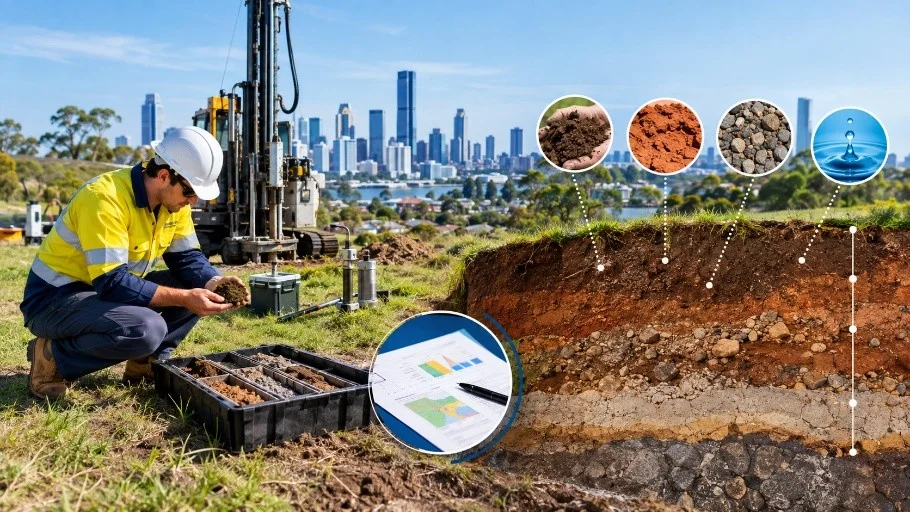
During Brisbane Soil Testing, soil samples can be collected from selected locations and depths to help establish the site’s soil profile.

2. Soil Reactivity

Soil reactivity is a major consideration for many residential construction projects.

Some clay soils expand when they absorb water and shrink when they dry. Repeated wetting and drying can cause movement beneath a building.

Engineers assess soil characteristics that indicate the potential for this type of movement. The findings can contribute to site classification and foundation recommendations.

Professional Foundation Soil Testing Brisbane can therefore provide useful information before decisions about slabs, footings and other foundation systems are finalised.

3. Bearing Capacity

Engineers need to know whether the ground can support the proposed building without excessive deformation. Bearing capacity refers to the ability of soil to support loads transferred through the foundation. If the soil is weak or compressible, the proposed foundation system may need to be reconsidered. The results from Geotechnical Investigation Brisbane can help engineers understand the strength and condition of soil layers beneath the site.

4. Soil Density and Compaction

Soil density is another important factor. Loose or poorly compacted soil can compress when subjected to building loads. This can increase the risk of settlement after construction. Engineers pay particular attention to sites containing fill because fill materials may vary significantly in composition and compaction.

Soil Testing Services Brisbane can help identify ground conditions that may require additional assessment, compaction or other engineering measures.

5. Moisture Content

Water can significantly influence soil behaviour. Engineers may assess the moisture condition of soil samples to understand how water may affect strength, volume and stability. Moisture conditions can be particularly important for clay soils because changes in water content can contribute to expansion and shrinkage. Understanding the relationship between soil and moisture can help engineers make better-informed decisions about foundations and drainage.

6. Settlement Potential

Settlement occurs when soil compresses or moves under the weight of a structure.

Some settlement may occur naturally after construction, but excessive or uneven settlement can create problems. Possible signs can include cracks, uneven floors, sticking doors and other structural or building-related issues.

Engineers use information from Soil Investigation Brisbane to assess whether particular soil layers could present a settlement concern. Early identification gives the project team an opportunity to consider suitable engineering solutions before construction progresses.

7. Groundwater Conditions

Groundwater can also influence construction. Depending on the site, engineers may investigate groundwater conditions because water can affect excavation, soil strength, drainage and slope stability. A high groundwater level can create additional challenges during excavation and foundation construction. For larger developments, groundwater information may form part of a broader Geotechnical Testing Brisbane investigation.

8. Existing Fill and Disturbed Ground

Some properties have been altered by previous development, demolition, landscaping or earthworks. As a result, the ground beneath a site may contain fill rather than naturally deposited soil. Engineers look for evidence of fill because uncontrolled or variable fill can behave differently from natural ground. If unsuitable fill is identified, additional investigation may be required.

This is one reason why Brisbane Soil Testing should be carried out before foundation decisions are finalised.

9. Slope Stability

Properties located on slopes require additional consideration.

Engineers may assess whether the existing slope is stable and whether proposed excavation, construction loads, drainage changes or retaining structures could affect stability. For these sites, Geotechnical Investigation Brisbane may include additional field investigation and engineering assessment. Slope-related information can help engineers and designers plan construction in a way that responds to the site’s ground conditions.

10. Foundation Suitability

Ultimately, many of the results obtained through soil testing are used to support foundation decisions. Engineers consider the soil profile, reactivity, strength, density, moisture and other characteristics when assessing foundation requirements. Foundation Soil Testing Brisbane can therefore play an important role in providing information needed for an appropriate foundation design. The purpose is not simply to collect soil samples. It is to understand how the ground is likely to behave when construction takes place.

Common Tests Used During Soil Investigation

The exact testing program varies from project to project. Engineers may use field investigation methods such as boreholes, hand augers, Dynamic Cone Penetrometer testing and soil sampling.

Laboratory testing may then be used to determine particular soil properties.

Some common areas investigated through Soil Testing Services Brisbane include:

Soil Factor What Engineers Want to Know Why It Matters
Soil type What materials exist below the site? Helps establish the soil profile
Reactivity How much could the soil move with moisture changes? Supports foundation planning
Bearing capacity How much load can the ground support? Influences foundation design
Density Is the soil loose or well compacted? Helps assess settlement risk
Moisture How much water is present in the soil? Influences soil behaviour
Settlement Could the ground compress under load? Helps reduce movement-related problems
Groundwater Is groundwater present and at what level? Supports excavation and drainage planning
Fill Has the site been previously disturbed? May require additional investigation
Slope stability Is the ground stable on sloping sites? Helps with safe development planning

 How Soil Testing Supports Foundation Design

 Soil testing and structural engineering work together. A structural engineer needs information about the ground when designing foundations. Soil test results can provide important information about soil strength, reactivity and other characteristics that may influence the design.

For example, if testing identifies reactive clay, the foundation design may need to account for potential ground movement. If testing identifies weak or poorly compacted material, engineers may need to investigate alternative foundation solutions or ground improvement options. This makes Geotechnical Testing Brisbane an important source of information for the wider construction team.

Why Local Soil Conditions Matter

 Brisbane has varied ground conditions, meaning that soil characteristics cannot always be assumed based only on the property’s location. Two nearby sites can have different soil profiles due to natural geological conditions, previous development, drainage patterns and changes in ground level.

Working with professionals experienced in Soil Testing Brisbane can help ensure that the investigation is designed around the actual characteristics of the site.

What Happens After Soil Testing?

After field investigation and laboratory testing are completed, the results are reviewed and interpreted by the geotechnical team.

The final report may include information about:

  • Soil profile
  • Site classification
  • Soil reactivity
  • Ground strength
  • Foundation considerations
  • Groundwater observations
  • Site-specific recommendations

The contents depend on the type and scope of investigation.

A Soil Report Brisbane prepared from appropriate site investigation data can then be provided to the relevant members of the construction team.

The report can help structural engineers, builders and other professionals understand the site’s ground conditions when planning the project.

 Engineers look at much more than the colour or appearance of soil during a site investigation. They assess soil type, reactivity, bearing capacity, density, moisture, settlement potential, groundwater, fill and slope stability to understand how the ground may behave under construction loads.

Professional Soil Testing Brisbane provides the ground information needed to support informed foundation and construction decisions. Whether you are building a new home, developing a property or planning a larger project, arranging a suitable soil investigation early can help your project team identify potential ground-related issues before construction begins.

Engineers commonly assess soil type, reactivity, bearing capacity, density, moisture, settlement potential, groundwater, fill and other ground conditions that could influence construction.

Reactive clay can expand when wet and shrink when dry. These changes can cause ground movement, which may affect foundations and building structures.

No. Testing requirements depend on the proposed building, soil conditions, slope, existing fill, site history and overall project complexity.

Soil testing provides information about ground strength, soil movement and other characteristics. Engineers can use these findings when assessing suitable foundation options.

Soil testing should generally be arranged during the planning and design stage, before foundation and structural decisions have been finalised.

Soil Failure

What Happens If You Don’t Get Soil Testing Brisbane Done First?

Building a new home, extension, shed, retaining wall, or commercial structure is a major investment. Before construction begins, however, there is one part of the project that is easy to overlook: the ground beneath the building. Soil Testing Brisbane helps identify the soil conditions that can affect foundation performance, construction costs, drainage, and long-term stability.

Skipping soil testing may seem like a way to save money and time at the beginning. In reality, it can create much larger expenses later. Brisbane properties can contain different soil profiles, including reactive clay, loose or filled ground, sandy soils, and other conditions that may behave differently under load or changing moisture conditions. Geotest Group explains that professional soil investigations can assess factors such as soil composition, bearing capacity, expansivity, and site stability before foundation design begins.

Why Is Soil Testing Brisbane Important Before Construction?

 A building foundation transfers the weight of a structure into the ground. If the ground conditions are not properly understood, the foundation may not be designed for the conditions actually present on the site.

The National Construction Code references AS 2870 for the classification of foundations where residential footings and slabs are located. Site classifications can range from relatively stable Class A conditions through reactive classes such as S, M, H and E, while Class P covers various problem-site conditions.

This is why pre-construction soil testing Brisbane should happen during the planning stage rather than after construction has already started.

A professional investigation can help determine:

  • Soil type and profile
  • Soil reactivity
  • Bearing capacity
  • Ground movement risk
  • Presence of fill or unsuitable material
  • Moisture-related behaviour
  • Potential drainage concerns
  • Foundation requirements
  • Whether additional geotechnical investigation is necessary

Without this information, important design decisions may be based on assumptions rather than actual site conditions.

1. You Could End Up with the Wrong Foundation Design

 One of the biggest consequences of skipping soil testing is choosing a foundation system without understanding the ground.

Different soils respond differently to the weight of a building. Reactive clay, for example, can experience movement as moisture conditions change. Soft or loose soils may have inadequate strength for the intended load. Filled areas may also require additional assessment.

If the foundation is designed without appropriate soil information, the project may require changes once construction is underway.

2. Foundation Movement Can Become a Serious Problem

A foundation does not simply need to support the building on the day construction finishes. It needs to continue performing as the soil responds to seasonal weather, moisture changes, loading and other environmental conditions.

If ground movement is underestimated, a structure may experience distress over time.

A proper Soil Testing Brisbane assessment helps identify soil behaviour before foundation construction, allowing the design team to account for the site’s conditions.

3. Your Construction Budget Could Increase

Many property owners consider soil testing an additional expense. The bigger financial risk, however, can be discovering poor ground conditions after construction has already begun.

Imagine starting a project based on an assumed soil condition and then discovering that the ground requires additional treatment or a different foundation solution.

A simple way to look at it

Testing cost = planned expense

Unexpected ground problem = potentially unplanned project expense

That makes early testing a practical risk-management decision rather than simply another construction fee.

4. You May Experience Construction Delays

Construction schedules depend on decisions being made in the correct order.

Foundation design is one of those decisions.

If soil information is missing, engineers may need to wait for testing before finalising recommendations. If testing is only arranged after excavation has started, unexpected conditions can create further delays.

5. You Could Face Approval and Certification Issues

Construction projects need to satisfy applicable building requirements and approval processes. Brisbane City Council notes that houses require building approval and that a licensed building certifier is involved in organising building approval.

The specific documentation required for a project depends on the development, site and approval pathway. Your building certifier, engineer or relevant authority may require supporting geotechnical information.

For residential footing and slab design, the NCC identifies AS 2870 as the relevant standard for site classification.

This means arranging appropriate soil investigation early can help your project team identify documentation requirements before construction progresses too far.

6. You May Not Discover Problem Ground Until It Is Too Late

A property can look perfectly stable from the surface while having very different conditions below ground.

A visual inspection alone cannot reliably establish everything an engineer needs to know about subsurface conditions.

Professional testing can investigate conditions at selected locations and depths, helping identify variations that may not be visible from the surface.

That is one reason Site classification Brisbane  should be treated as part of the initial site investigation process.

7. Sloping Blocks Can Carry Additional Risks

If your site has a noticeable slope, retaining walls, neighbouring slopes or other signs of potential ground instability, a standard residential soil assessment may not be the only investigation required.

A slope stability assessment may be recommended depending on the site’s characteristics.

Geotest Group describes slope stability investigations as involving site inspection, shallow ground testing, assessment of subsurface conditions and engineering analysis where required.

8. Drainage Problems May Be Overlooked

Changes in moisture can affect certain soil types, while poor drainage can contribute to erosion, saturation or other ground-related problems. Geotest Group’s Brisbane soil testing services include consideration of drainage and moisture-related characteristics as part of relevant investigations.

If drainage conditions are not properly considered during planning, water may accumulate around foundations or travel through areas where it creates unwanted ground movement.

Testing does not eliminate every drainage problem, but it gives engineers better information for making appropriate recommendations.

What Information Can Soil Testing Provide?

The exact testing program depends on the project and site. A professional investigation may involve on-site testing, soil sampling, laboratory analysis and engineering interpretation.

Soil Investigation Area Why It Matters
Soil classification Helps determine how the ground is expected to behave
Reactivity Identifies potential movement associated with moisture changes
Bearing capacity Helps engineers assess how the ground can support structural loads
Soil profile Shows the types and layers of material below the surface
Moisture conditions Helps identify factors that may influence soil behaviour
Fill identification Helps identify areas where placed or disturbed material may require attention
Slope conditions Helps determine whether additional stability assessment may be appropriate
Laboratory testing Provides additional technical information about sampled materials
Site classification report Provides information used for foundation and construction planning

Why Local Experience Matters in Brisbane

Soil conditions can vary considerably between properties and suburbs. Even neighbouring blocks should not automatically be assumed to have identical ground conditions.

Geotest Group provides geotechnical and soil testing services across Brisbane and surrounding areas, including Logan, Ipswich, Gold Coast and Sunshine Coast. The company states that it has more than 10 years of experience and has completed more than 2,000 projects.

Skipping Geotechnical testing Brisbane may appear to save money at the beginning of a construction project, but it can expose homeowners, builders and developers to unnecessary uncertainty. Foundation movement, unexpected ground conditions, redesigns, construction delays and additional costs are all easier to manage when the soil is investigated before construction begins.

It can cause foundation issues, unexpected costs, design changes, and construction delays.

It identifies soil type, reactivity, bearing capacity, and ground conditions for better foundation design.

Yes, poor understanding of soil movement can increase the risk of foundation-related cracking.

Requirements vary by project and site. Check with your engineer or building certifier.

Ideally, arrange it during the planning stage, before foundation design and construction begin.

Soil Failure

What Is Soil Testing Brisbane and Why Is It Important?

Soil Testing Brisbane is the process of checking the ground’s strength, type, and moisture behaviour before construction begins. It’s important because Brisbane’s soil, especially reactive clay, can shift with weather changes, and testing helps engineers design a safe, crack-free foundation while meeting council approval requirements.

What Is Soil Testing?

Soil testing is a site inspection process where engineers collect and analyse soil samples to understand how the ground will behave under a building’s weight. It checks strength, moisture content, and reactivity.

Site Soil Testing Brisbane is carried out before construction starts. Small test holes are dug or drilled, samples are sent to a lab, and the findings are documented in a Soil Report Brisbane. This report becomes the foundation (literally) for every design decision that follows.

Why Soil Testing Matters in Brisbane

Brisbane has varied soil conditions, ranging from sandy coastal ground to reactive clay found inland. Reactive clay expands when wet and contracts when dry, which can quietly damage a structure over time if it’s not accounted for.

Key reasons soil testing is essential:

  • Prevents foundation failure – Identifies the right foundation design for the exact soil type.
  • Reduces long-term repair costs – A soil test costs far less than fixing a cracked slab or wall.
  • Meets council approval requirements – Brisbane councils generally require a Soil Report Brisbane before issuing building permits.
  • Improves structural safety – A stable base means a safer, longer-lasting building.
  • Supports drainage and landscaping plans – Reveals how water moves through the soil.

Types of Soil Testing Explained

Geotechnical Soil Testing Brisbane

Geotechnical Soil Testing Brisbane is an in-depth engineering study of soil layers, bearing capacity, groundwater levels, and reactivity class. It’s typically required for larger builds such as commercial structures, retaining walls, and multi-storey homes.

Construction Soil Testing Brisbane

Construction Soil Testing Brisbane gives builders the practical data needed before laying foundations. It flags risks like soft ground, loose fill, or unstable layers before work begins.

Foundation Soil Testing Brisbane

Foundation Soil Testing Brisbane determines the best foundation type for a site — slab, raised footing, or piered foundation — directly influencing both design and cost.

How the Soil Testing Process Works

1. Site inspection – An engineer visits the property and marks test locations.

2. Sample collection – Soil is collected from various depths using an auger or drilling rig.

3. Lab testing – Samples are analysed for moisture, strength, and reactivity class.

4. Report generation – A detailed Soil Report Brisbane is prepared with foundation recommendations.

5. Handover – The report is passed to the builder and engineer for design and council submission.

Most reports are ready within 3 to 5 business days after sample collection.

Who Needs Soil Testing?

  • Homeowners planning a new build
  • Builders working on residential or commercial sites
  • Developers managing land subdivisions
  • Anyone adding an extension, pool, or retaining wall
  • Buyers wanting to check land stability before purchase

Getting Site Soil Testing Brisbane done early, even before finalising building plans, can save time and avoid surprises later.

Warning Signs You May Need a Soil Test

If a structure already exists, watch for these signs of soil movement:

  • Cracks appearing in walls or ceilings
  • Doors or windows that stick or won’t close properly
  • Uneven or sloping floors
  • Visible gaps between walls and ceilings

These signs often point to soil-related foundation issues that a fresh assessment can diagnose.

How to Choose a Soil Testing Provider in Brisbane

Look for a provider offering:

  • Qualified, experienced geotechnical engineers
  • Fast, clear report turnaround
  • Easy-to-understand documentation
  • Strong local knowledge of Brisbane soil conditions
  • Proper licensing and insurance

The right partner makes the entire building process smoother, from planning through to council approval.

Soil testing is a foundational step, not an optional extra, in any Brisbane construction project. A reliable Soil Report Brisbane protects your investment, supports council approval, and helps avoid costly repairs down the road.

Whether you’re building new, extending, or developing land, start with proper Geotechnical Soil Testing Brisbane and build on solid ground.

Most on-site testing takes a few hours, with reports ready within 3 to 5 business days.

Yes, most Brisbane councils require a soil report before approving building permits.

It includes soil classification, reactivity level, bearing capacity, and foundation recommendations.

Costs vary by site size and soil type, but it’s minor compared to potential repair costs later.

Yes, it helps engineers design a foundation matched to the soil, lowering the risk of future cracks.