
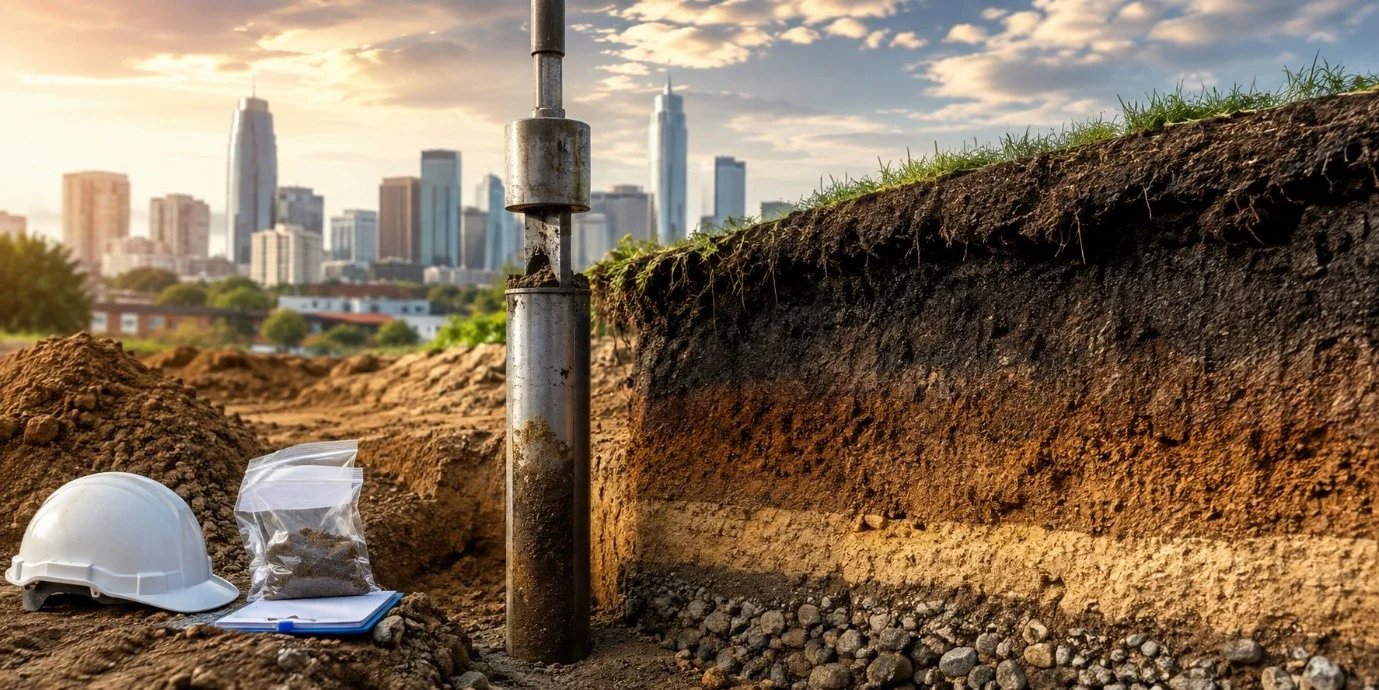
Building a home, commercial property or other structure starts with one important question: what is underneath the site? The ground may look stable from the surface, but hidden soil conditions can create serious construction challenges. Soil Testing Brisbane helps property owners, builders and engineers understand what is happening beneath the ground before construction begins.
A professional soil investigation can reveal information about soil type, strength, moisture, drainage, movement and other characteristics that may influence the way a building should be designed. Identifying these conditions early can help reduce unexpected problems, construction delays and additional costs.
Why Can Ground Risks Remain Hidden?
A building site can appear completely normal while having different soil layers underneath. Soil conditions can change significantly across a single property. One section may contain firm natural soil, while another may have loose fill, reactive clay or poorly compacted material.
Some risks are difficult to identify through a simple visual inspection. Without appropriate testing, important ground conditions may remain unknown until excavation or foundation work begins.
Common hidden conditions may include:
- Reactive or expansive clay
- Loose or poorly compacted soil
- Uncontrolled fill
- Soft or weak soil layers
- High moisture levels
- Poor drainage conditions
- Variable soil profiles
- Ground movement potential
- Conditions affecting foundation stability
This is why Brisbane soil testing can be an important part of the planning process.
What Hidden Risks Can Soil Testing Identify?
Professional soil testing services Brisbane can provide useful information about the physical characteristics of the ground. The exact tests required depend on the property, proposed development and site conditions.
1. Reactive Soil
Some soils can expand when they absorb moisture and shrink when they dry. This repeated movement may place stress on foundations and building structures.
Identifying reactive soil before construction allows engineers to consider suitable foundation solutions for the site.
2. Weak or Unstable Soil
Soil with insufficient bearing capacity may not provide adequate support for a proposed structure. If weak layers are present, foundation design may need to account for these conditions.
Geotechnical soil testing Brisbane can help determine whether the ground has characteristics that could affect structural support.
3. Uncontrolled Fill
Previously disturbed sites may contain fill material from earlier construction or landscaping work. If fill has not been properly placed and compacted, it may behave differently from natural ground.
Testing can help identify the nature and condition of fill so that appropriate construction decisions can be made.
4. Moisture and Drainage Concerns
Water within or around the soil can influence its behaviour. Poor drainage may contribute to changes in soil moisture, particularly around foundations.
A detailed soil investigation Brisbane can provide valuable information about site conditions and help identify factors that may need consideration during design and construction.
5. Variable Soil Layers
A site may contain several soil layers with different properties. For example, topsoil may sit above clay, sand, gravel or fill.
Understanding these layers is important because foundations interact with the underlying ground, not simply the soil visible at the surface.
How Does Soil Testing Help Before Construction?
The main benefit of ground testing Brisbane is better information before major construction decisions are made.
A typical investigation may involve collecting soil samples or conducting field tests at selected locations across the site. The results can then be assessed to understand relevant soil characteristics.
The findings may contribute to a soil report Brisbane, which can help builders, engineers and property owners understand the conditions identified during the investigation.
This information can support decisions involving:
- Foundation design
- Site preparation
- Excavation
- Soil classification
- Drainage considerations
- Construction planning
- Potential ground movement
- Appropriate engineering recommendations
Can Soil Testing Prevent Construction Problems?
Soil testing cannot eliminate every construction risk, but it can reduce uncertainty by identifying relevant ground conditions before construction progresses too far.
For example, discovering problematic soil after foundations have already been designed may require changes to the construction approach. In some cases, unexpected ground conditions can lead to additional excavation, redesign, delays or increased costs.
Early foundation soil testing gives project professionals useful information during the planning stage rather than discovering important conditions unexpectedly during construction.
Why Brisbane Sites Need Proper Soil Investigation
Brisbane properties can have varying ground conditions depending on location, previous land use, drainage, geology and other site-specific factors. Two nearby properties can have different soil characteristics.
Previous earthworks can also influence what lies beneath a site. A block that has been levelled or filled may have a different subsurface profile from its surrounding properties.
Because ground conditions are site-specific, relying only on assumptions or neighbouring property information may not provide enough certainty for a new construction project.
Professional soil conditions Brisbane assessments can provide site-specific information that is more useful for planning.
When Should Soil Testing Be Completed?
Ideally, soil testing should be arranged during the early planning stages, before foundation design and construction decisions are finalised.
Early testing gives the relevant professionals time to review the results and consider the site’s characteristics. It can also help identify whether further investigation may be appropriate.
For homeowners, developers and builders, arranging testing early can make the construction process more predictable.
What Happens After the Testing?
Once testing is completed, the results are assessed and documented. Depending on the type of investigation, the resulting report may describe soil characteristics, test results and relevant site observations.
The report can then be provided to the appropriate building or engineering professionals for consideration during project planning.
If unusual or potentially challenging ground conditions are identified, further assessment may be recommended before construction proceeds.
Choose Professional Soil Testing for Better Planning
A successful building project depends on more than the visible features of a block. What lies beneath the surface can influence foundation design, site preparation and construction performance.
Professional testing provides useful information about the ground before construction begins. Instead of relying on assumptions, property owners and builders can make decisions based on site-specific findings.
If you are planning a residential or commercial project, consider arranging Soil Testing Brisbane through a qualified testing provider
Yes, testing can identify soil characteristics and conditions that may affect foundations, stability and construction planning.
It helps identify site-specific ground conditions before foundation and construction decisions are finalised.
Yes, appropriate testing can assess soil behaviour and help determine whether reactive soil conditions are present.
No, soil conditions can vary between properties due to geology, previous earthworks, drainage and other site factors.
Soil testing is best arranged early in the planning process, before foundation design and construction begin.


