
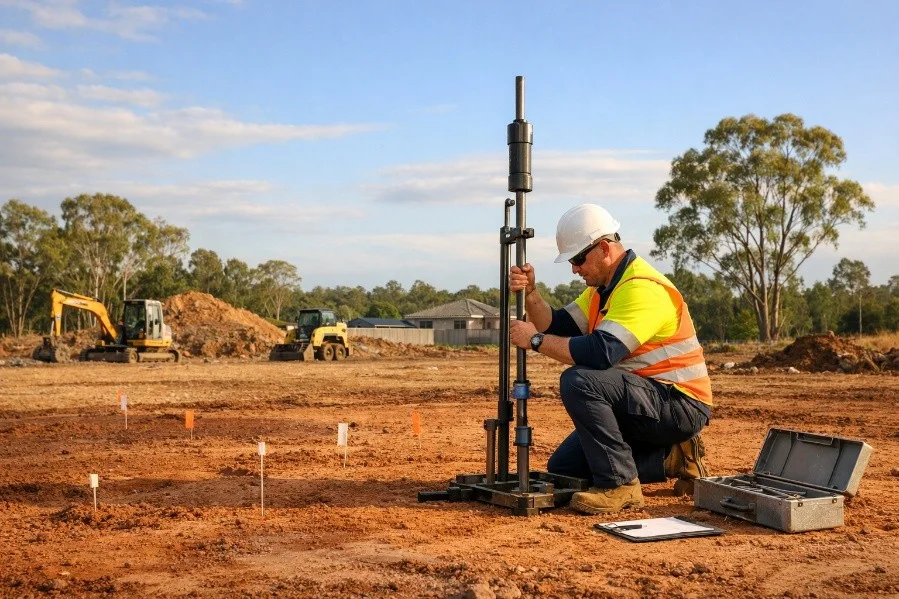
A DCP Test Brisbane, or Dynamic Cone Penetrometer Test, is a soil testing method that measures how strong or weak the ground is by driving a cone-tipped rod into the soil and counting the blows needed to reach a set depth. It’s one of the fastest and most affordable ways to check soil strength before building a home, driveway, shed, or any structure.
If you’re planning any construction in Brisbane, here’s everything you need to know about this test, how it works, and why it matters.
What Is a DCP Test?
A Dynamic Cone Penetrometer Test works by hammering a steel rod with a cone tip into the ground at set intervals. Engineers record the number of blows it takes to push the rod a fixed distance. Fewer blows mean softer soil. More blows mean firmer, more stable ground.
This data helps engineers understand:
- Soil strength at different depths
- Whether the ground can support a foundation
- If extra reinforcement is needed before building
It’s a core part of Geotechnical Testing Brisbane projects because it gives quick, on-site results without needing heavy drilling equipment.
Why Is a DCP Soil Test Important?
Brisbane’s soil varies a lot between suburbs. Some areas have firm clay, others have loose sandy soil, and some have reactive ground that expands or shrinks with moisture. A DCP Soil Test removes the guesswork by showing exactly what’s beneath the surface.
Key reasons to test your soil:
- Prevents structural damage like cracking or sinking
- Guides foundation design so it matches your soil type
- Saves money by avoiding over-built or under-built foundations
- Meets council requirements for building approval
- Reduces risk on sites with unstable or reactive soil
Skipping this step is one of the most common reasons for foundation problems later on.
How Does Soil Testing Brisbane Work?
Soil Testing Brisbane services generally follow five simple steps:
- Site Visit – A technician inspects the property and marks test points
- Testing – The DCP rod is driven into the soil at each point
- Data Recording – Blow counts are logged at every depth
- Analysis – Engineers interpret the readings to map soil layers
- Reporting – You receive a clear report with foundation recommendations
Most tests are completed the same day, making it a quick step in your construction timeline.
Where Is a DCP Test Used?
A DCP Test Brisbane is useful for almost any project involving ground load, including:
- New home foundations
- Driveways and pavements
- Retaining walls
- Sheds, garages, and carports
- Small commercial buildings
- Roads and footpaths
If weight is going on the ground, it’s worth knowing what’s underneath it first.
Benefits of Professional Geotechnical Testing Brisbane
Choosing an experienced team for Geotechnical Testing Brisbane makes a real difference in accuracy and reliability. Benefits include:
- Accurate readings from trained, certified technicians
- Fast turnaround on reports
- Local soil knowledge specific to Brisbane suburbs
- Compliance with Australian building standards
- Confidence that your foundation is built on solid ground
Local expertise matters because soil conditions can change significantly even within the same street.
Signs You Might Need a DCP Test
You may need a DCP Soil Test if:
- You’re starting a new build from scratch
- Your land shows cracks, uneven areas, or drainage issues
- You’re extending or renovating a property
- Your council requires soil data for approval
- You want to avoid costly structural surprises later
Testing early, even when it’s optional, is a small step that prevents bigger problems down the line.
A DCP Test Brisbane is a quick, cost-effective way to understand your soil before you build. It gives engineers the data they need to design a safe, long-lasting foundation, whether it’s for a home, driveway, or commercial site.
If you need reliable Soil Testing Brisbane services, work with a team that understands local ground conditions and delivers clear, easy-to-read reports.
It measures soil strength to help engineers design a safe foundation.
Most tests are completed within a few hours on the same day.
It’s not always mandatory, but many councils and builders recommend or require it.
Cost depends on site size and number of test points, so a quote is best.
Yes, it clearly shows weak or loose layers that may need extra foundation work.