
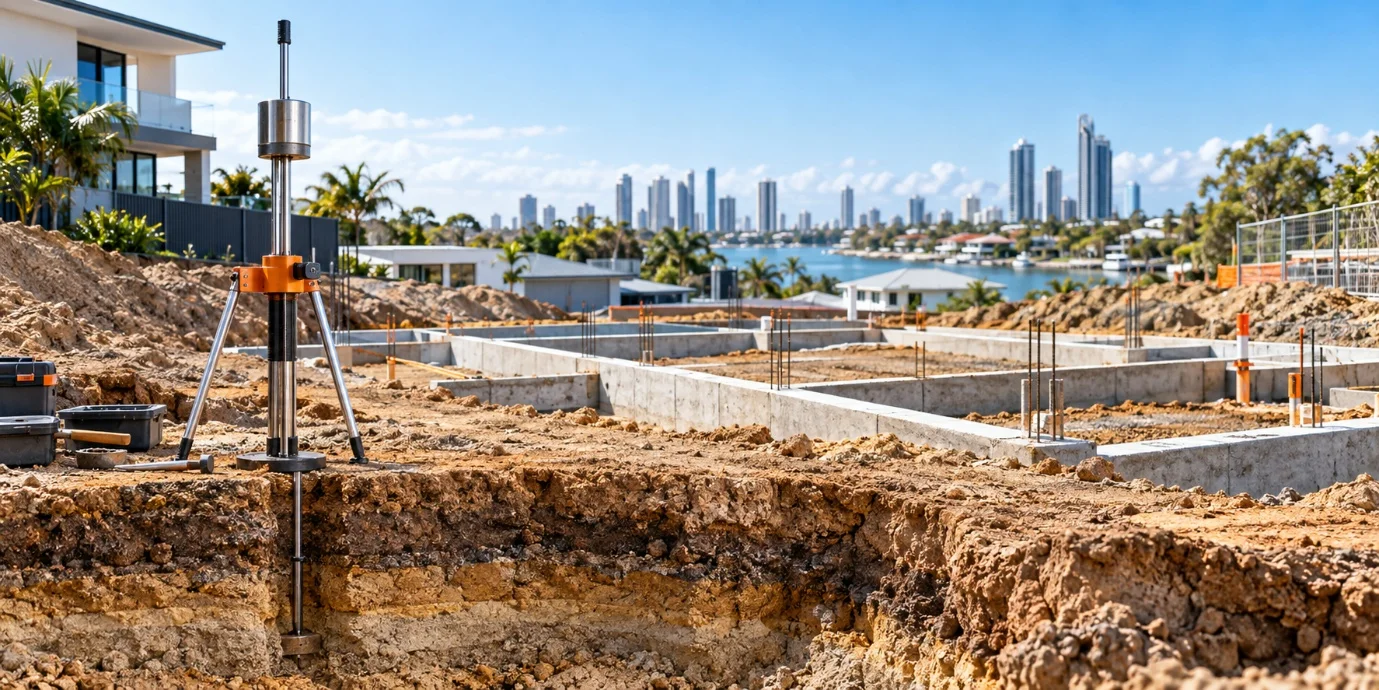
Starting a building project without knowing what lies beneath the surface can create unexpected challenges. Soil Testing Gold Coast gives builders, property owners and engineers useful information about ground conditions before construction begins. GeoTest Group provides professional testing services that help identify soil characteristics and support better decisions during the planning and construction stages. Understanding the ground early can make foundation planning more practical and help reduce avoidable construction risks.
Why Is Ground Testing Important Before Construction?
Every building transfers its weight into the ground through its foundation. If the underlying soil is weak, loose, unstable or affected by moisture, it may influence the performance of the structure over time.
Ground testing provides information about the soil and subsurface conditions at a proposed building site. This information helps engineers understand whether the ground is suitable for the planned structure and what factors may need to be considered during design.
Testing before construction is generally more useful than discovering an unexpected ground issue after building work has already started. Early investigation gives the project team time to consider the findings during planning.
Understanding Soil Conditions
Soil can vary significantly from one property to another. Two nearby sites may have different soil layers, moisture levels, density and strength. These differences can affect how a building foundation interacts with the ground.
Professional Soil Testing helps identify important soil characteristics that may influence construction. The findings can give engineers a clearer understanding of the site instead of relying only on general assumptions about the local area.
This information is particularly useful when planning new residential buildings, extensions, commercial developments and other structures that require reliable foundation support.
Supporting Foundation Planning
The foundation is responsible for transferring the weight of a building into the ground. Its design needs to take the site’s conditions into account.
A detailed Soil Report can provide valuable information for engineers when assessing foundation requirements. Depending on the project, factors such as soil strength, density, moisture and the depth of different soil layers may need to be considered.
When these conditions are understood before construction, the foundation design can be developed with greater awareness of the actual site environment.
Identifying Potential Ground Problems
Some ground conditions cannot be identified simply by looking at the surface. A site may contain soft soil, uncontrolled fill, variable layers or other conditions that could affect construction.
A professional Site Investigation can help identify ground characteristics that deserve further attention. Finding potential issues during the planning stage allows engineers and builders to consider appropriate solutions before construction progresses.
Early investigation can also help reduce the chance of significant changes being required after construction has already started.
Improving Construction Planning
Good construction planning depends on reliable information. Ground testing gives project teams site-specific information that can be considered alongside architectural plans, structural designs and other technical details.
The results can help engineers assess how the proposed building may interact with the ground. This is particularly useful where soil conditions vary across the site or where the proposed structure will place substantial loads on the foundation.
Understanding the site earlier can make communication between property owners, engineers and builders more straightforward.
Helping With Foundation Design
Foundation selection should not be based only on the type or appearance of a building. The ground supporting the structure is equally important.
Information about Foundation Design can be developed with reference to the site’s tested soil characteristics. Depending on the results, engineers may need to consider the type, depth and configuration of the proposed foundation.
Ground testing does not replace engineering design, but it provides important site information that engineers can use when making foundation-related decisions.
Reducing Unexpected Construction Costs
Unexpected ground conditions can sometimes result in additional investigation, design changes, construction delays or other expenses. While testing cannot remove every possible construction risk, early investigation can help reduce uncertainty.
Understanding Soil Conditions before construction allows project teams to consider potential ground-related requirements during the planning and budgeting stages.
For property owners, this can be especially useful because major changes discovered during construction may be more disruptive than issues identified before work begins.
Understanding Ground Behaviour
Soil responds to building loads differently depending on its physical characteristics. Some soils may support loads effectively, while others may compress, shift or respond differently when moisture conditions change.
Testing provides engineers with information that can help them assess the likely behaviour of the ground. The findings can then be considered when developing the structural and foundation approach for the project.
A clear understanding of ground behaviour is particularly important for projects where long-term stability and reliable foundation performance are major considerations.
Ground Testing for Different Projects
Ground investigation can be relevant to a wide range of building projects. New homes, commercial buildings, industrial structures, extensions and other developments may all require an understanding of the supporting ground.
The type and extent of testing required will depend on the proposed development, site characteristics and engineering requirements. A professional testing provider can help determine the appropriate investigation for a particular project.
On the Gold Coast, site-specific soil information can be useful because ground conditions can vary between properties and locations.
What Happens After Testing?
After testing is completed, the findings are generally compiled into a report that can be provided to the relevant building or engineering professionals.
A Soil Report may contain information about the tested ground conditions and observations relevant to the proposed development. Engineers can review this information alongside the building plans when considering foundation and structural requirements.
The report should be interpreted in relation to the specific project and site. It should not automatically be treated as a complete assessment of every part of a property unless the investigation was designed to provide that level of coverage.
Why Professional Testing Matters
Accurate ground information depends on using suitable investigation methods, appropriate equipment and careful reporting. Professional testing helps provide dependable information that can support the decisions made during the planning and construction process.
Rather than waiting for a ground-related issue to appear during construction, property owners and builders can investigate the site during the early planning stages.
This approach helps connect the site’s actual ground conditions with engineering requirements, foundation planning and construction expectations.
The ground beneath a building plays an important role in its long-term performance. Soil Testing Gold Coast helps identify important soil and ground characteristics before construction begins, giving engineers and property owners useful information for planning. With the support of GeoTest Group, project teams can obtain site-specific testing information that contributes to informed construction decisions.
Combining Soil Testing, Site Investigation, a reliable Soil Report and suitable Foundation Design can help reduce uncertainty during the building process. Testing does not replace professional engineering advice, but it provides valuable information that engineers can consider when developing an appropriate foundation and construction approach. For reliable Soil Testing Gold Coast, GeoTest Group can assist property owners, builders and project professionals with appropriate ground investigation services.
Ground testing examines soil and subsurface conditions to provide information for building and foundation planning.
Soil Testing helps identify ground characteristics that may affect foundation selection and construction requirements.
A Soil Report provides documented findings about tested soil and ground conditions relevant to the project.
Yes, appropriate testing can help identify soil conditions that may require further investigation or engineering consideration.
Ground testing is generally most useful during the planning stage before foundation and construction decisions are finalised.
