
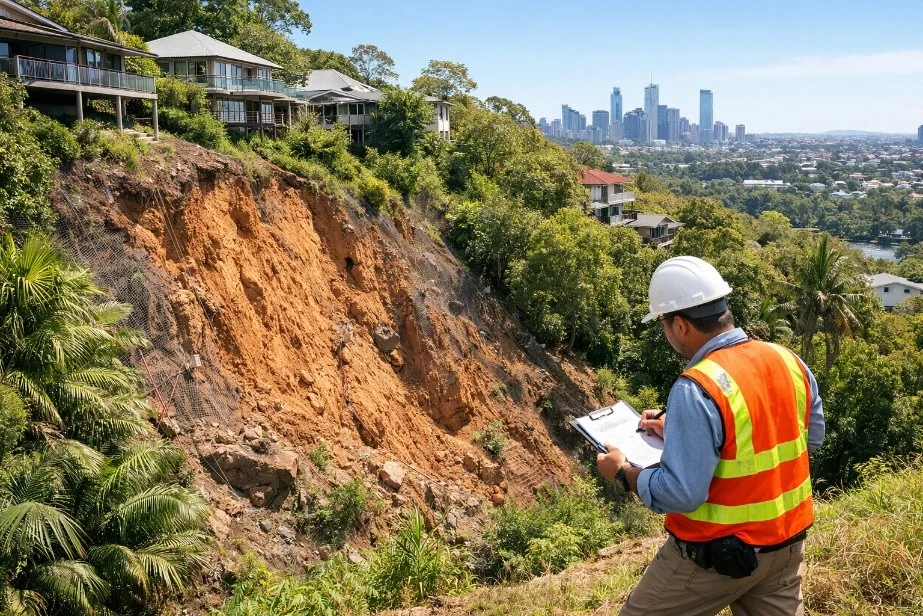
Brisbane’s hilly suburbs and rapidly growing construction zones make Slope Stability Assessment Brisbane one of the most important — and often overlooked — steps in any building project. Whether you’re building a home in The Gap, a commercial complex in Ferny Grove, or a retaining wall in Towing, understanding what’s beneath your feet can save lives and money.
This guide breaks down what a slope stability assessment is, why Brisbane projects need one, and what you can expect from the process.
What Is a Slope Stability Assessment?
A slope stability assessment is a technical evaluation carried out by a geotechnical engineer to determine whether a slope — natural or man-made — is safe and stable. It looks at the risk of movement, erosion, or full collapse under various conditions, including heavy rainfall, excavation, or construction loads.
In Brisbane, where properties are often built on hilly terrain with reactive clay soils, this type of assessment is not just smart — it’s sometimes legally required before development approval is granted.
Why Brisbane Properties Need Extra Attention
Brisbane’s geography creates unique challenges for builders and homeowners. Key risk factors include:
- Steep residential blocks in suburbs like Kenmore, Chapel Hill, and Pullenvale
- High rainfall events that saturate soil quickly
- Expansive clay soils that shrink and swell with moisture changes
- Existing retaining walls that may be aging or underbuilt
- Cut and fill sites where part of a slope has been altered for a building pad
A Geotechnical Assessment Brisbane takes all these local conditions into account. A standard desktop study used in flat, stable areas won’t cut it here.
Who Needs a Slope Stability Assessment?
You’ll likely need one if you’re:
- Building on or near a slope steeper than 15 degrees
- Constructing a retaining wall over 1 metre in height
- Planning excavation close to a boundary or existing structure
- Developing a commercial site with large footprints on sloped land
- Buying property on a hillside and want peace of mind before you commit
- Responding to council requirements during the development application (DA) process
Brisbane City Council and surrounding councils like Moreton Bay, Logan, and Redland City all have specific requirements around slope failure risk in planning schemes.
What Does the Assessment Process Look Like?
Here’s a simple breakdown of what to expect:
- Site Visit and Visual Inspection A geotechnical engineer visits the site to observe the slope, existing structures, drainage patterns, and any signs of past movement like cracking, bulging, or water seepage.
- Soil Investigation This may involve drilling boreholes, digging test pits, or using cone penetration tests (CPT) to understand soil layers and strength. A proper soil investigation Brisbane gives the engineer real data — not guesswork.
- Laboratory Testing Soil samples are tested for shear strength, moisture content, and other properties that affect how the ground behaves under load or saturation.
- Stability Analysis Using software and engineering principles, the engineer calculates the factor of safety — essentially how close the slope is to failure. Results guide recommendations for construction methods or remediation.
- Geotechnical Report You receive a formal report outlining findings, risk levels, and recommended actions. This is what you submit to council or share with your builder and structural engineer.
Residential vs. Commercial Assessments: What’s Different?
For residential slope stability projects, assessments are typically scoped for single dwellings or small multi-unit developments. The focus is on protecting the home, its occupants, and neighbouring properties.
For commercial geotechnical reports, the scope is broader. Larger buildings impose heavier loads, excavation is often deeper, and the potential consequences of slope failure are more serious. Engineers factor in traffic loads, drainage infrastructure, vibration from machinery, and long-term performance under changing conditions.
Both need a licensed geotechnical engineer — but commercial projects usually require more detailed investigation and more conservative safety margins.
What Happens If You Skip This Step?
Skipping a landslide risk assessment Brisbane can lead to:
- Council rejecting your development application
- Structural damage to your home or building
- Retaining wall collapse — a serious safety hazard
- Legal liability if your slope affects a neighbour’s property
- Costly remediation after the fact, which is always more expensive than prevention
In Brisbane’s wet seasons, slopes that look stable can move fast. A proper cut and fill assessment before you break ground is the best insurance you can have.
How to Choose the Right Geotechnical Engineer
When hiring for a slope stability assessment Brisbane, look for:
- RPEQ registration (Registered Professional Engineer of Queensland)
- Experience with Brisbane’s specific soil types and local planning requirements
- Clear communication — they should explain findings in plain language
- Transparent pricing with no hidden fees
- Willingness to liaise directly with council if needed
Ask for previous project examples in your suburb or similar terrain. Local experience matters more than you’d think.
A slope stability assessment isn’t a bureaucratic hurdle — it’s a practical safeguard for your investment, your safety, and your community. Brisbane’s terrain is beautiful but demanding, and the right geotechnical advice early in a project can prevent enormous problems down the track.
Whether you’re a homeowner planning a new build, a developer managing a commercial site, or an architect speccing a challenging hillside project — get the assessment done right and done early.
Costs typically range from $1,500 to $5,000+ depending on site complexity and the level of investigation required.
Yes, council often requires one as part of the development application process for sloped or steep sites.
Most assessments are completed within 1–3 weeks, including site investigation and report preparation.
Walls over 1 metre typically require engineering sign-off, which usually includes a geotechnical assessment.
A minimum factor of safety of 1.5 is generally required for permanent slopes under static conditions in Australia.